How to Introduce a Queen Bee: Step-by-Step Cage Method
How to introduce a new queen bee with the cage method: prepare the colony, place the cage, when to check, how to confirm acceptance and what to do if she fails.
Quick answer: use the cage release method. Place the queen cage between two brood frames in a colony that is truly queenless, leave the candy plug intact so the workers eat through it over a few days, and don’t open the hive for 5–7 days. At that check, remove any queen cells and look for eggs in worker cells. Done this way, the large majority of mated queens are accepted.
Introduction is where most requeening attempts succeed or fail. Done well, the bees accept the new queen within days. Done badly, the workers kill her, and you lose the queen, several weeks of brood and the cost of a replacement.
This guide covers the cage release method, the safest and most consistent technique for mated queens. It works whether you’re requeening a queenless colony, replacing an underperforming queen or heading a split. If you’re requeening after the main flow, read our guide to requeening in late summer as well, which covers timing and varroa treatment.
Why queen introduction is delicate
A honey bee colony recognises its queen by pheromones, especially queen mandibular pheromone (QMP). When you remove the existing queen and add a new one, the colony first loses its queen’s scent, then meets a foreign one. Workers may attack the new queen as an intruder unless they have time to adapt.
The adjustment typically takes 3–7 days. During this window, the queen must be physically protected from the workers while staying close enough for them to sense and feed her through a barrier. That’s exactly what an introduction cage provides.
Before you start: check the colony
Don’t introduce a queen until these conditions are met:
- The colony is queenless. Remove the old queen and wait about 24 hours so the colony notices her absence. If you find a virgin queen or queen cells, remove them first, otherwise the new queen will probably be killed.
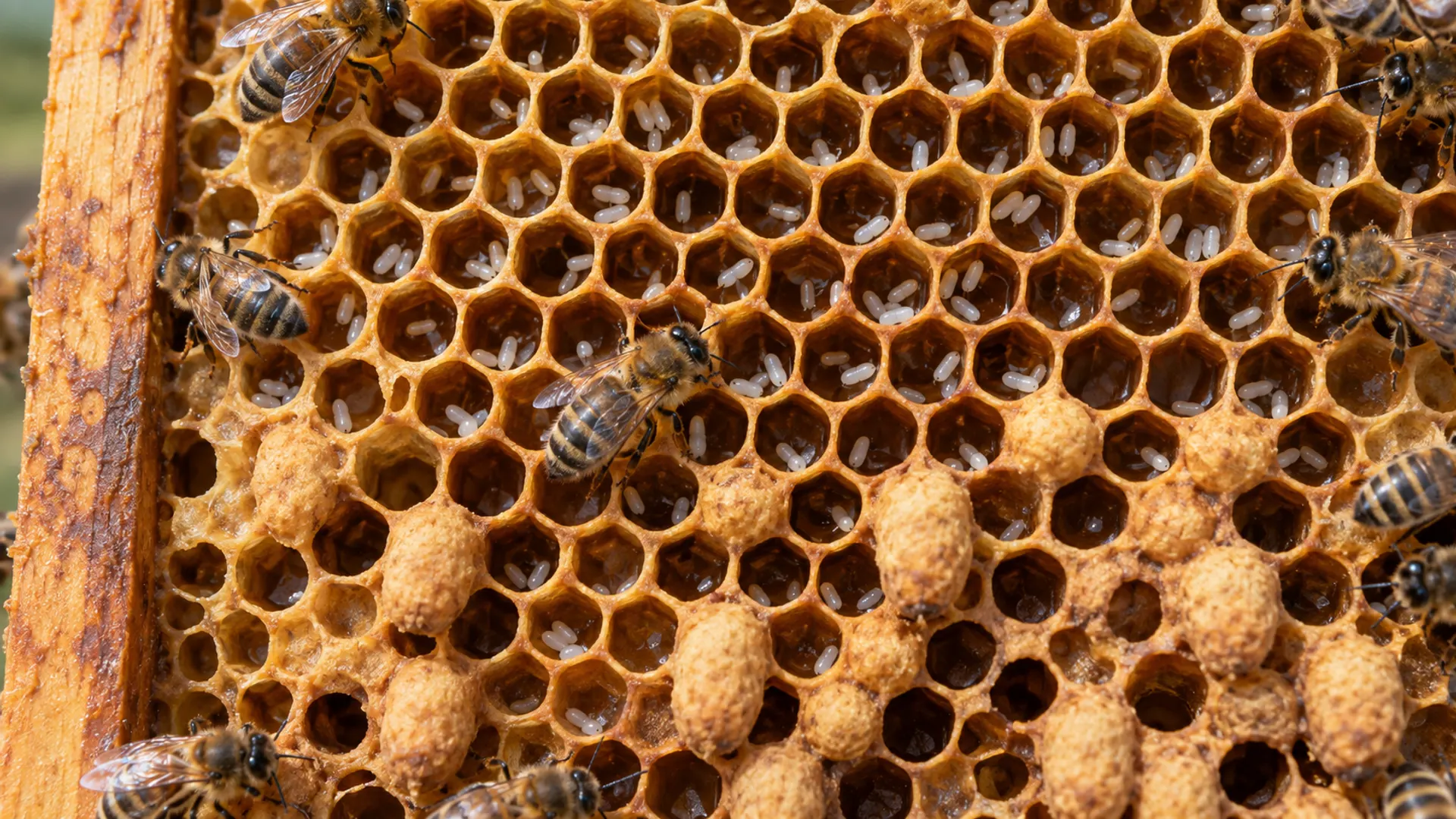
- No laying workers. When a colony has been queenless for about three weeks or more and has no open brood left, some workers may start laying. They lay unfertilised eggs, often several per cell and on the cell walls, which become drones. A colony with laying workers will usually reject any queen. Give it a frame of eggs and open brood from another colony once a week for two to three weeks, or unite it with a queenright colony, before trying again.
- Calm weather. Avoid cold, windy or stormy days, when the colony is more agitated. Mild afternoons (15–25°C) are ideal.
- A nectar flow or feeding. Colonies accept queens best when forage is coming in. In a dearth, bees are more defensive and robbing makes things worse. If natural nectar is scarce, feed 1:1 syrup starting 2–3 days before introduction.
The cage release method, step by step
1. Inspect the introduction cage
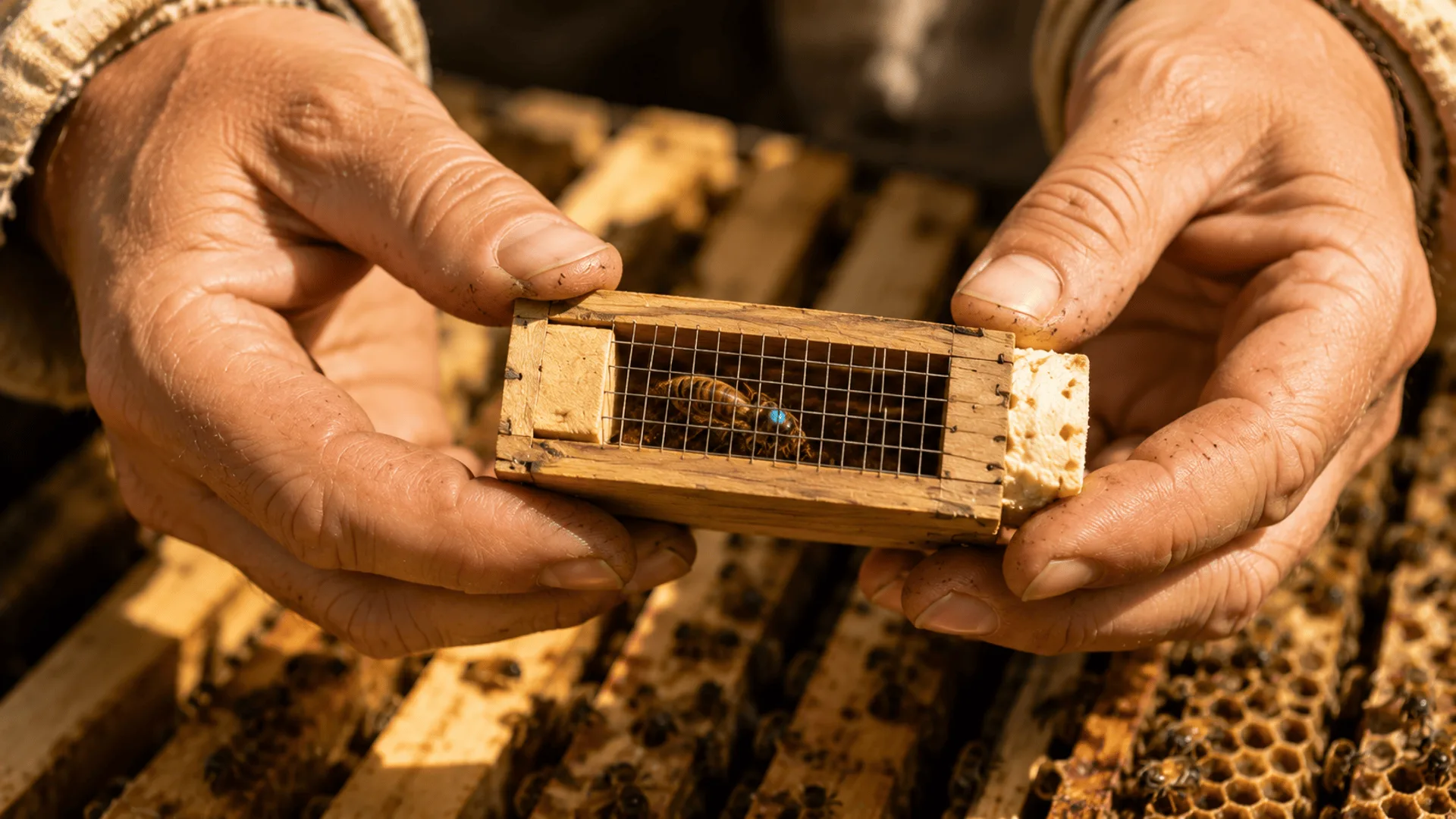
The queen arrives in a small wooden or plastic cage with a candy plug at one end. Workers eat through the candy over several days and release her gradually. Confirm:
- The queen is alive and active (moving inside the cage)
- Her attendant bees are with her. Many beekeepers remove the attendants just before introduction, because foreign attendants can provoke the host bees; it is not essential.
- The candy plug is intact (not already eaten away)
2. Open the colony
Open the hive normally. Locate the brood nest, the frames with eggs, larvae and capped brood. Remove one frame from the centre, or push frames apart, to make room.
3. Wedge the cage between two frames
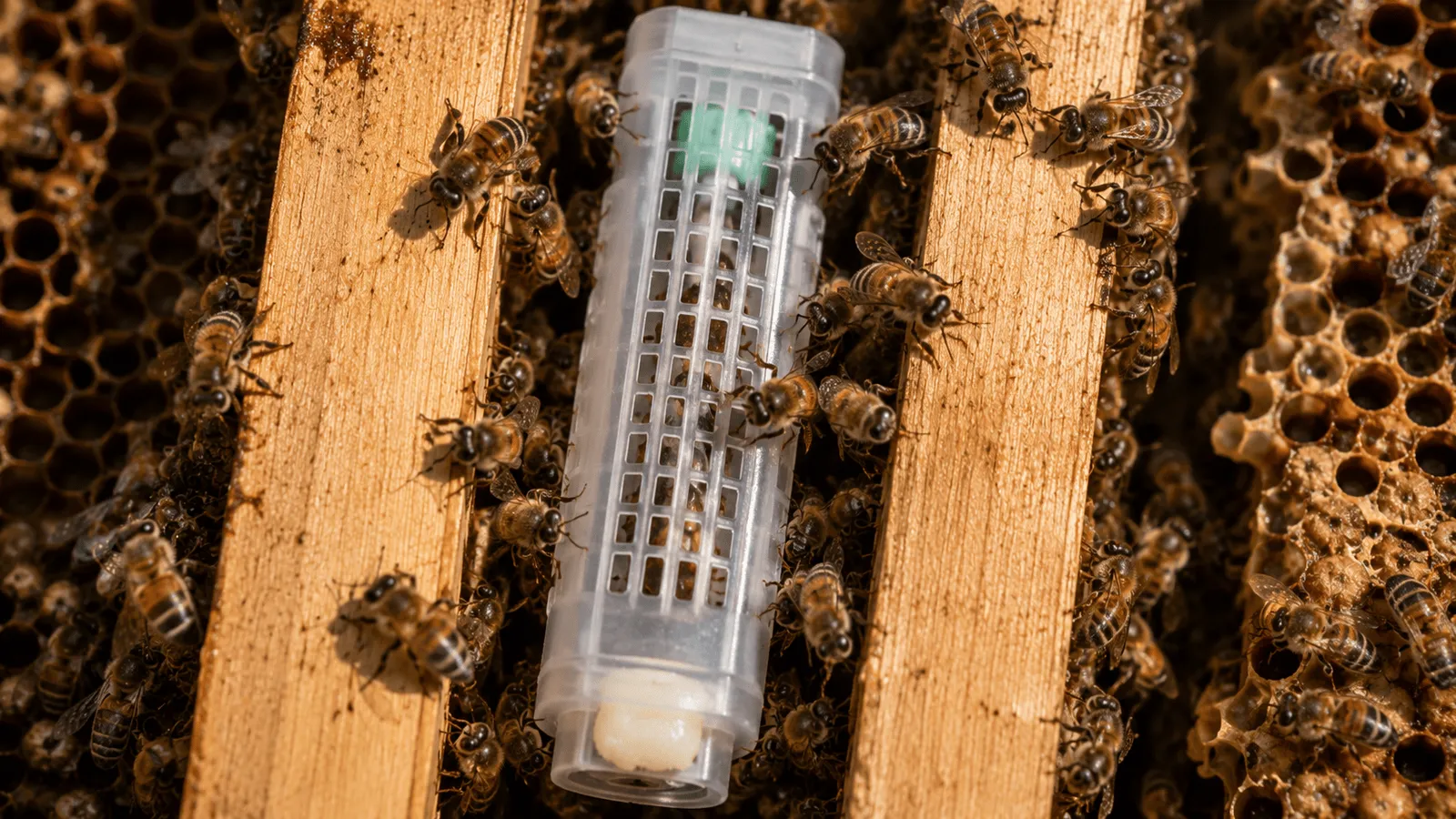
Place the cage between two brood frames in the centre of the brood nest, with the candy plug facing up or sideways, never down, so a dead attendant can’t block the exit. The mesh side must face the bees so workers can touch and feed the queen through it.
Press the frames back together gently to hold the cage in place without crushing it.
4. Close the hive with minimal smoke
Avoid heavy smoke at this stage. It masks pheromones and disturbs the colony. Close the hive calmly.
5. Wait 5–7 days. Don’t peek.
The most common mistake new beekeepers make is opening the hive after a day or two to “check on her”. The disturbance can make the bees attack a queen who has only just been released.
Wait at least 5 days before any inspection. By then the workers have eaten through the candy, the queen has been released and acceptance is usually well under way.
6. Check acceptance after 5–7 days
Open the hive carefully and work calmly. Look for:
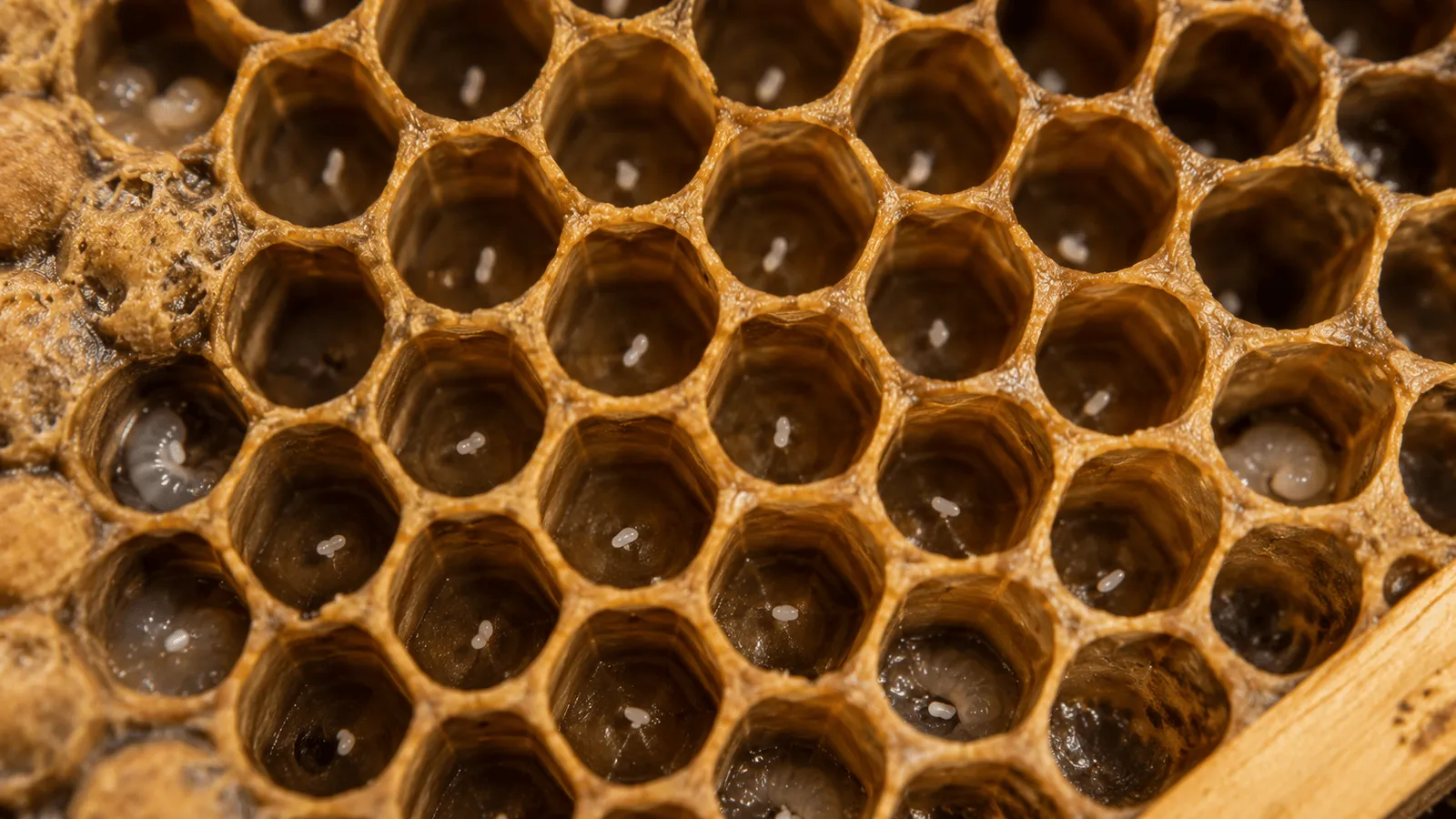
- Eggs in worker cells. Single eggs standing upright at the bottom of the cells mean the queen is laying. This is the clearest sign of acceptance.
- Calm workers around her. Workers feeding or grooming the queen mean she’s accepted. Workers clinging to her in a tight ball are attacking her: cage her again for a few days.
- Queen cells. Colonies start emergency queen cells within one to two days of losing their queen, so there may be some on the brood frames. Remove every one of them.
- An empty cage. If the candy is gone and the cage is empty, the queen has been released. Remove the cage.
If you still see no eggs and no queen 14 days after introduction, the colony has probably killed her. Before introducing another queen, check again for queen cells or a virgin queen, since emergency queens start to emerge around 11–12 days after the colony became queenless.
Common mistakes to avoid
Direct release without a cage. Sometimes used for splits made up of young bees, but acceptance is far less reliable than with a cage. For a queen you paid for, use the cage.
Releasing the queen manually too soon. Removing the candy plug yourself shortens the adjustment from days to hours. The workers haven’t accepted her scent yet, so the risk of rejection is high.
Introducing during a dearth or while robbing is going on. Without incoming nectar, colonies are more defensive and less willing to accept a strange queen. If there is no flow, feed light syrup for a few days before and during introduction, and keep entrances narrow.
Overlooking queen cells. A common cause of failure is emergency queen cells the colony built before or after the cage went in. A virgin that emerges will fight the introduced queen, and the colony may prefer its own. Remove all queen cells before introducing, and check again at the first inspection.
After acceptance: the first 4 weeks
A newly introduced queen needs time to settle into a steady laying rhythm. Don’t expect full laying until 3–4 weeks after acceptance. Typical observations:
- Week 1: small patches of eggs, some gaps in the pattern
- Week 2: the first capped worker brood appears (eggs hatch after 3 days, larvae are capped about 6 days later)
- Weeks 3–4: the laying pattern becomes consistent and brood fills the frames evenly
If the queen is still producing a spotty brood pattern (gaps, drone brood in worker cells) after 4 weeks, she may be poorly mated or failing, although disease or a lack of food can look similar. Check for brood disease and stores before blaming the queen.
If a queen arrives dead or in poor condition
Check the queen as soon as the parcel arrives. If she is dead or in poor condition, contact the breeder straight away with a photo.
At Bienen Königin, a queen that arrives dead or in poor condition is replaced free of charge: send us a photo via WhatsApp within 48 hours of delivery.
Summary
Successful queen introduction comes down to four things: (1) make sure the colony is truly queenless, (2) use the cage release method, (3) wait 5–7 days without disturbing the colony, (4) at the first check, remove queen cells and confirm eggs in worker cells.
For the breeding side of the equation, what makes a queen worth introducing in the first place, see the difference between naturally mated queens from semi-isolation and reproductive isolation stations, or browse our mated queens for the season.
Frequently Asked Questions
How long until the queen starts laying eggs after introduction?
A mated queen usually starts laying within a few days of being released from the cage. Single eggs standing at the bottom of worker cells at the 5–7 day check confirm that she has been accepted.
What if the queen is rejected?
If workers are balling her, put her back in the cage for a few days and check again. If she has been killed (no queen and no eggs 14 days after introduction), look for queen cells or a virgin queen and remove them before introducing a new queen with the same method.
Can I release the queen manually before workers eat the candy plug?
Not recommended. Releasing her yourself shortens the adjustment from days to hours and sharply increases the risk of rejection. Let the workers eat through the candy over a few days.
Do I need a queen excluder during introduction?
No. The cage itself acts as the barrier. A queen excluder above the brood box is unrelated to the introduction process and is not required.
Does the new queen need her own attendants?
No. The host workers feed her through the mesh. Many beekeepers remove the attendants that travelled with her just before introduction, because foreign attendants can provoke the host bees. Never add extra attendants.
Should I feed syrup during introduction?
Yes, if there is no nectar flow. Colonies accept a queen best when food is coming in, so feed 1:1 syrup starting 2–3 days before introduction. During a good natural flow, feeding is unnecessary.
Related articles
Carnica vs Buckfast: Which Queen Bee Suits Your Apiary?
Carnica vs Buckfast bees compared: temperament, honey yield, wintering, swarming and varroa. Which breed fits your climate, nectar flows and experience?
Laying Workers: How to Spot Them and Save the Colony
Laying workers or a drone-laying queen? How to tell them apart, why laying worker bees reject a new queen, and four methods that work to save the colony.
Queen Bee: What She Does, Lifespan, Size and Mating
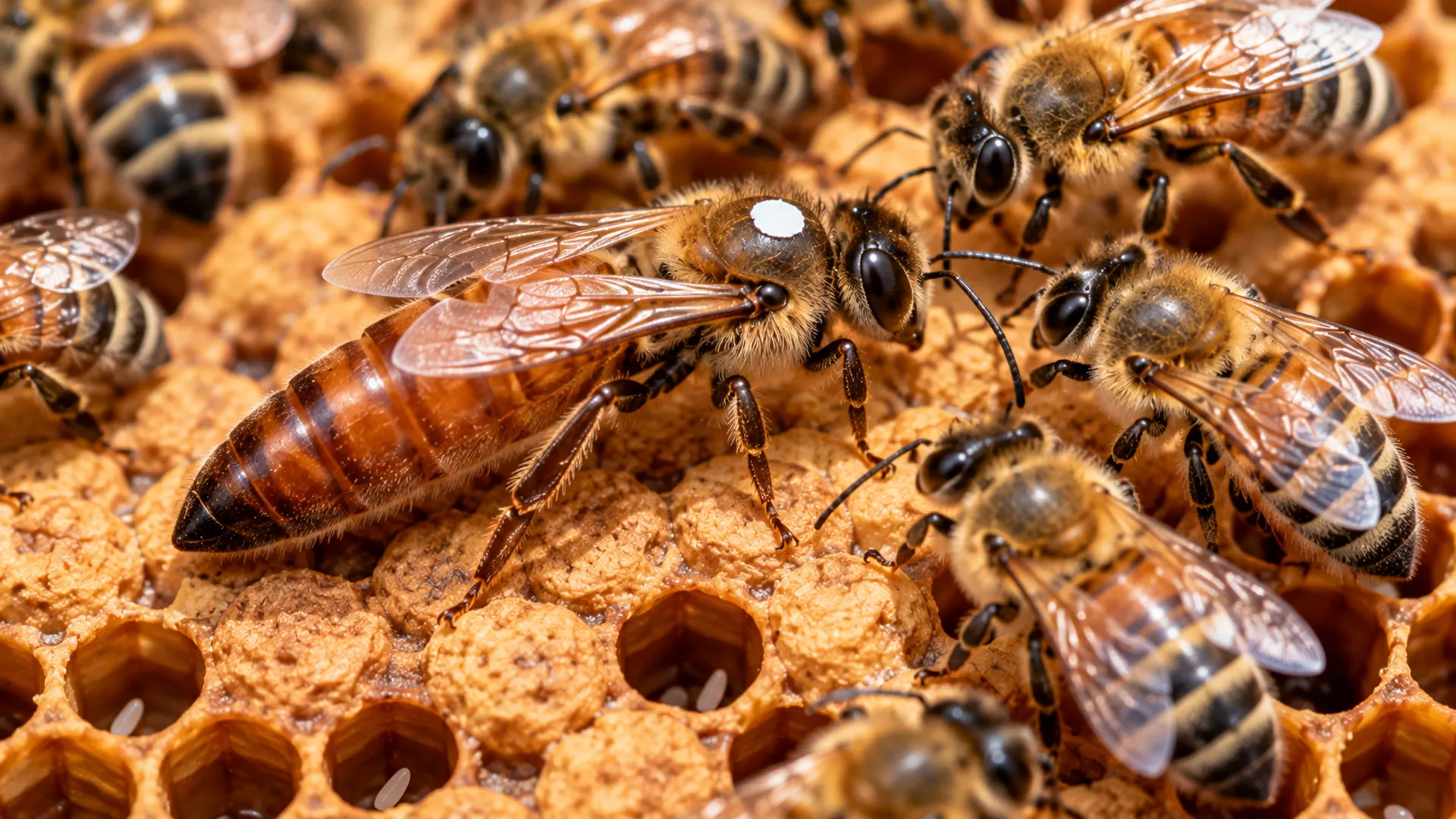
The queen bee explained: what she does, how a queen is made, mating flights, how long she lives, how big she is next to workers and drones, and how to spot her.