Laying Workers: How to Spot Them and Save the Colony
Laying workers or a drone-laying queen? How to tell them apart, why laying worker bees reject a new queen, and four methods that work to save the colony.
Quick answer: laying workers appear when a colony has been queenless for a long time with no open brood left. Some workers start laying unfertilised eggs, which can only become drones. You spot them by several eggs per cell, eggs stuck to the cell walls and scattered, domed drone brood in worker cells. A queen introduced straight in is almost always killed. The safest fixes are combining with a strong colony, or shaking the bees out away from the apiary and then giving frames of open brood. If the colony is small or it’s already late autumn, saving it isn’t worth it.
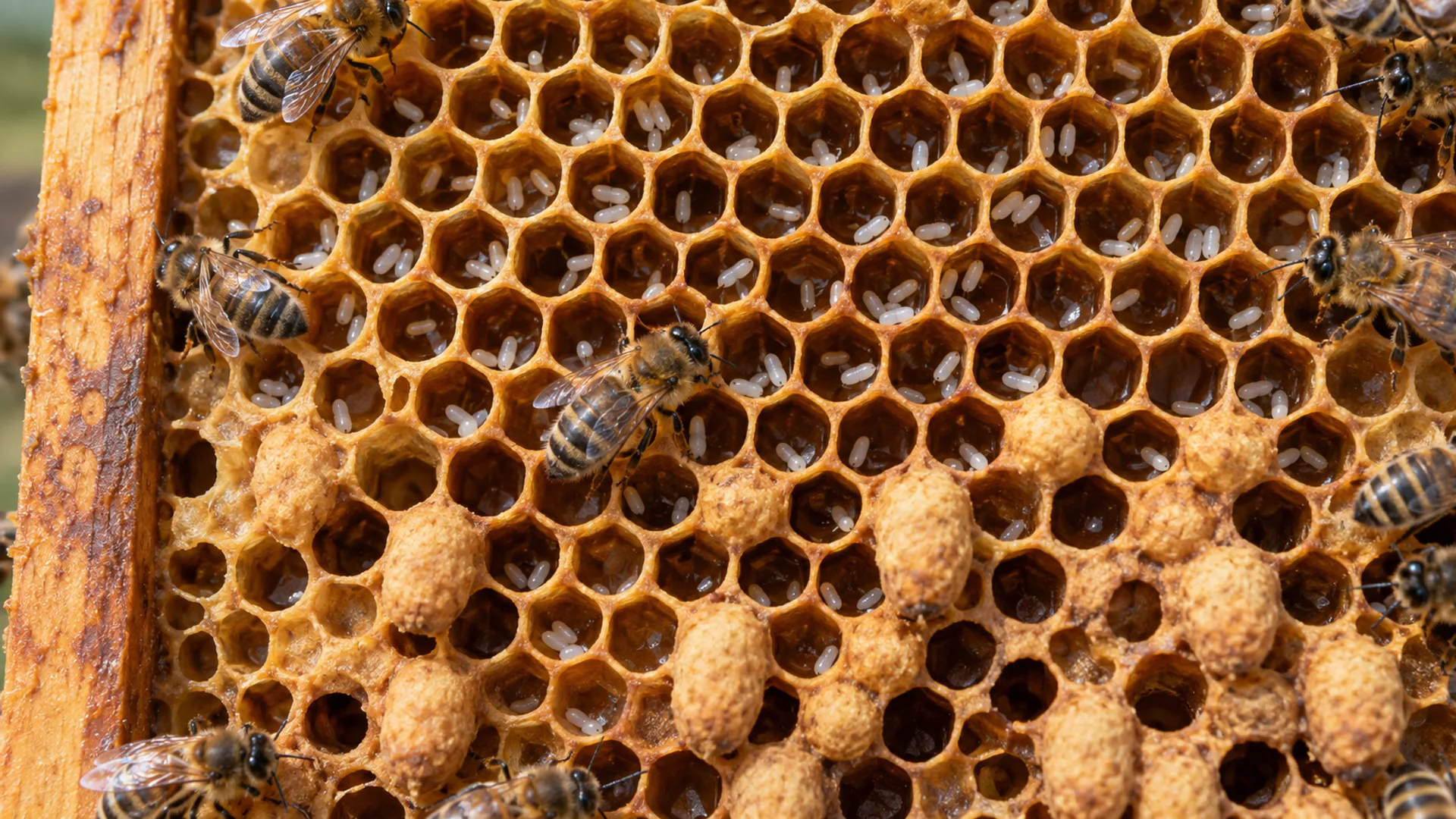
A colony with laying workers is one of the most frustrating things to find in an apiary. At first glance everything looks normal: bees are flying, bringing in pollen, and there are eggs on the comb. But there’s no queen, and everything that emerges is a drone. Without help, the colony dwindles and dies within a few weeks.
Laying workers can almost always be prevented, and when they do appear there are proven ways to deal with them. None is guaranteed, and not every colony is worth the effort.
How laying workers develop
In a normal colony, two chemical signals keep the workers’ ovaries inactive: the queen’s pheromones and the pheromones of open brood (mainly young larvae). While both are present, only a tiny number of workers lay, and other bees find and remove those eggs.
The trouble starts when a colony loses its queen and fails to raise a new one. The emergency cells fail, the young queen doesn’t come back from her mating flight, or there were simply no suitable larvae left. Once the last brood is capped, both signals are gone. In some workers the ovaries develop and they begin to lay. It usually takes about three weeks or more without open brood, which is why checking a suspicious colony quickly matters so much.
Laying worker bees are unmated. Their eggs are unfertilised and produce only drones, which are smaller than normal because they grow up in worker cells.
Laying workers or a drone-laying queen?
A colony can end up producing only drones in two ways. Either laying workers are at it, or a poorly mated, unmated or worn-out queen is laying only unfertilised eggs. That is a drone-laying queen, and the fix is quite different.
| Sign | Laying workers | Drone-laying queen |
|---|---|---|
| Eggs per cell | Often 2 or more | Usually one |
| Egg position | On the cell walls, not just the base | Centred on the cell base |
| Brood pattern | Patchy and scattered over several frames | More compact, but mostly or entirely drone brood |
| Cappings | Domed cappings on worker cells | Domed cappings on worker cells |
| Queen cells | Sometimes small, pointless cells with drone larvae | Sometimes supersedure cells, also with drone larvae |
| Queen | None | Found if you search carefully |
A few practical notes:
- Several eggs per cell don’t automatically mean laying workers. A young queen just starting to lay in a small colony sometimes puts two eggs in a cell. She still lays on the cell base, and she settles down quickly.
- Eggs on the cell walls are the clearest sign. A worker’s abdomen is too short to reach the base of the cell, so the egg sticks to the side.
- Bullet brood. Drones raised in worker cells need more room, so the bees cap them with raised domes. Across a whole frame it looks like a field of small bullets.
- Behaviour. Colonies with laying workers are often restless and give the loud “roar” of a queenless colony when you open them.
If you see domed drone brood but single, centred eggs, look for the queen first. Then it’s straightforward: find the drone-laying queen, remove her, leave the colony queenless for a day and introduce a mated queen as described in our guide on how to introduce a queen.
Why laying workers reject a new queen
This is the heart of the problem. A colony with laying workers doesn’t behave like a queenless colony. The laying workers give off some of the signals the colony associates with a queen. The colony “believes” it is queenright and treats any new queen as an intruder.
Add the age structure. No workers have emerged for weeks, there are hardly any nurse bees left, and old foragers accept change much less readily. Even with a cage and candy plug, acceptance is far lower than in an ordinary queenless colony.
The practical rule: don’t put a valuable queen straight into a colony with laying workers. Change the state of the colony first, then introduce the queen.
Methods that work in practice
Beekeeping associations and the literature keep coming back to the same few methods. Each has strengths and limits.
Method 1: Shake out away from the apiary
Carry the hive 50 to 100 metres or more away, shake or brush all the bees onto the grass, and put a hive with frames free of drone brood back on the old stand. The foragers fly back to the old spot or drift into neighbouring colonies. Some beekeepers shake the colony out miles away and effectively give it up.
The idea is that some laying workers have rarely flown, orient poorly and don’t find their way back. You can’t rely on it, because some return anyway. That’s why shaking out works best combined with open brood.
- Pros: quick, weakens no other colony, gets rid of the drone brood frames.
- Cons: some bees are lost, neighbouring colonies receive restless bees, the result is uncertain.
Method 2: Frames of open brood, repeated
Give the colony a frame of eggs and young larvae from a healthy colony, placed in the centre, once a week, two or three times in a row. The brood pheromones gradually suppress the laying workers’ ovaries, and the remaining nurse bees have something to tend again.
The sign of success: the colony starts emergency queen cells on the brood frame. From that moment it behaves like a normal queenless colony. Break down the cells and introduce a mated queen in a cage.
- Pros: the gentlest method, the colony stays intact.
- Cons: takes two to three weeks and weakens the donor colonies; in a small, ageing colony the brood may not be cared for properly.
Method 3: Combine with a strong colony
Put the laying worker colony on top of a strong, queenright colony with a sheet of newspaper between them, slit in a few places. Within two or three days the bees chew through the paper, get used to a shared scent, and the strong colony’s queen takes over. Alternatively, combine frame by frame after spraying all the bees with thin syrup.
- Pros: the safest method, bees and comb are kept.
- Cons: you lose a colony as a unit, and there is a small residual risk to the host queen. Many beekeepers therefore shake out the problem colony first and combine only the bees that return.
Once the combined colony is strong again, you can make a split next spring and give it a new queen.
Method 4: Split it among several colonies
Distribute the frames with their bees, one or two at a time, among several strong colonies. The risk to each host is small, and the bees keep working. It’s also a way of giving up the colony, just without losing bees.
The methods compared
| Method | Time needed | Chance of success | Cost |
|---|---|---|---|
| Shake out away from the apiary | One day | Moderate, better combined | Lost bees |
| Open brood frames, repeated | 2 to 3 weeks | Good, while the colony is still strong | Weakens donors |
| Combine (newspaper method) | A few days | Best | Colony lost as a unit |
| Split among several colonies | One day | Very good | Colony lost as a unit |
When saving the colony isn’t worth it
Be honest with yourself. Saving a laying worker colony only makes sense if the gain outweighs the effort. Let it go if:
- the colony covers only a few frames. A handful of old bees can’t raise brood even if they accept a queen.
- it’s already late autumn. A new queen won’t have time to raise enough winter bees. How late requeening still makes sense is covered in requeening in late summer.
- you’ve given two or three frames of open brood and no queen cells have appeared. The colony is probably too old.
- you have no strong colonies to take brood from without setting back their build-up or honey flow.
In those cases, combining or splitting is the best decision. You keep the comb, and the empty hive is ready for a new split in spring.
How to prevent laying workers
- Check colonies after swarming, after requeening and after every split. A young queen not laying three weeks after emergence is a warning sign.
- Give a queenless colony a frame of open brood right away. It buys time and stops laying workers from developing.
- Keep a spare queen or a small nuc in the season so you can react in days rather than weeks.
A mated queen for the rescued colony
Once the colony has started queen cells on the brood frame, or you’ve combined it and later split it again, you need a mated queen that starts laying straight away. Our Carnica and Buckfast queens from Maramureș, Romania, are naturally mated and marked. You’ll find prices and shipping windows on our queens page, and you can reserve by WhatsApp or phone.
Frequently Asked Questions
How do I know if I have laying workers?
Look for several eggs per cell, eggs stuck to the cell walls and scattered, domed drone brood in worker cells. If the eggs are single and centred but only drones are produced, look for a drone-laying queen first.
How do I tell laying workers from a drone-laying queen?
Laying workers lay several eggs per cell, often on the cell walls, in a scattered pattern, and there is no queen. A drone-laying queen lays one egg per cell on the cell base in a more compact pattern, and you can find her if you search carefully. Both produce domed drone brood in worker cells.
Why does a laying worker colony kill a new queen?
Laying workers give off signals similar to a queen's, and the population is old. The colony behaves as if it were queenright and kills the new queen. Change the state of the colony first with frames of open brood or by combining, then introduce the queen.
Can laying workers produce worker bees?
No. Laying worker bees are unmated, so their eggs are unfertilised and produce only drones, which are smaller than normal.
What is the best way to get rid of laying workers?
The safest way is to combine the bees with a strong queenright colony over newspaper or split the frames among several colonies. To keep the colony, give a frame of open brood once a week, two or three times, until it starts queen cells, then introduce a mated queen.
How do I prevent laying workers?
Give a queenless colony a frame of eggs and young larvae right away. Open brood keeps the workers' ovaries inactive and buys you time to get a queen.
Related articles
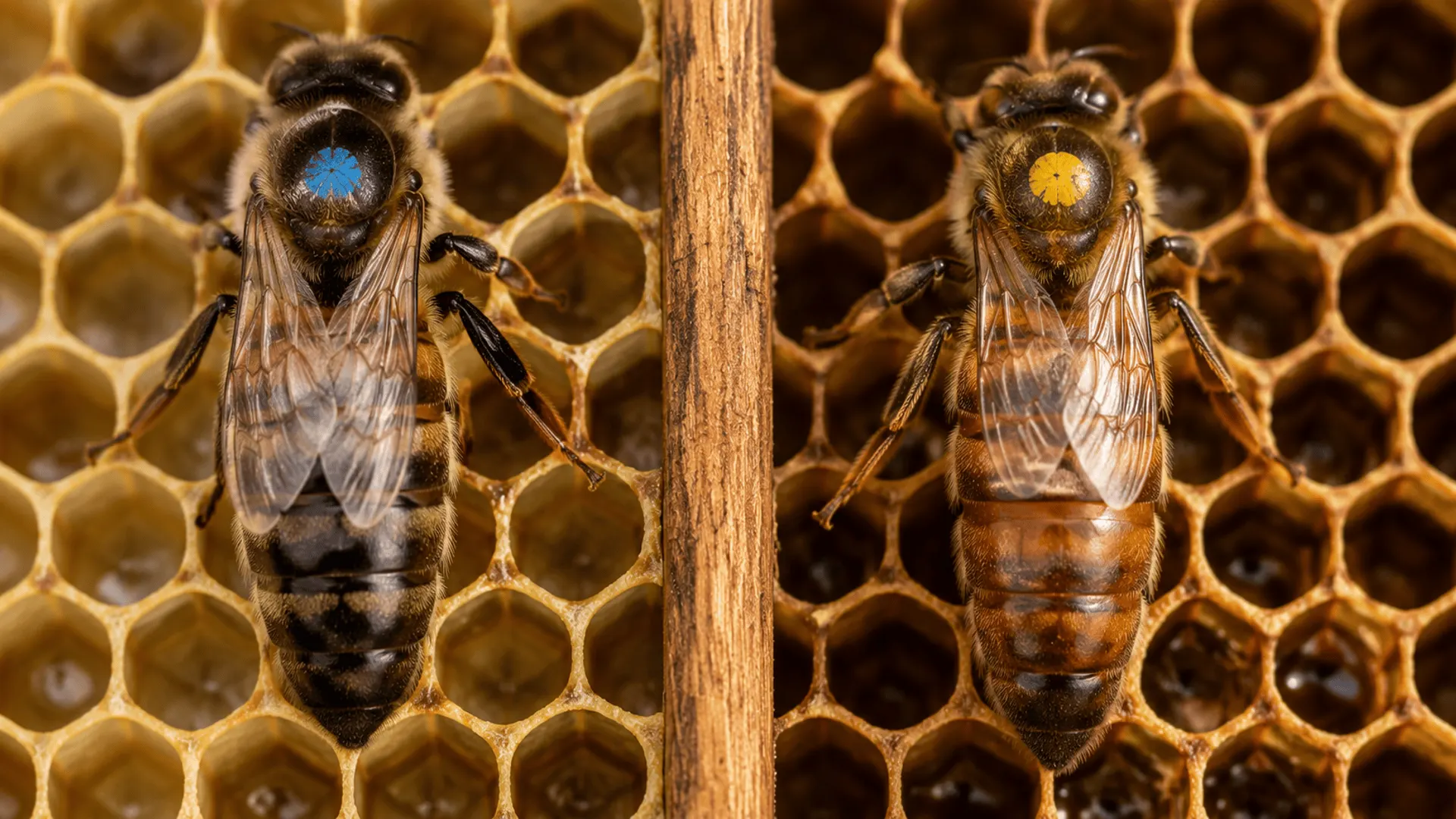
Carnica vs Buckfast: Which Queen Bee Suits Your Apiary?
Carnica vs Buckfast bees compared: temperament, honey yield, wintering, swarming and varroa. Which breed fits your climate, nectar flows and experience?
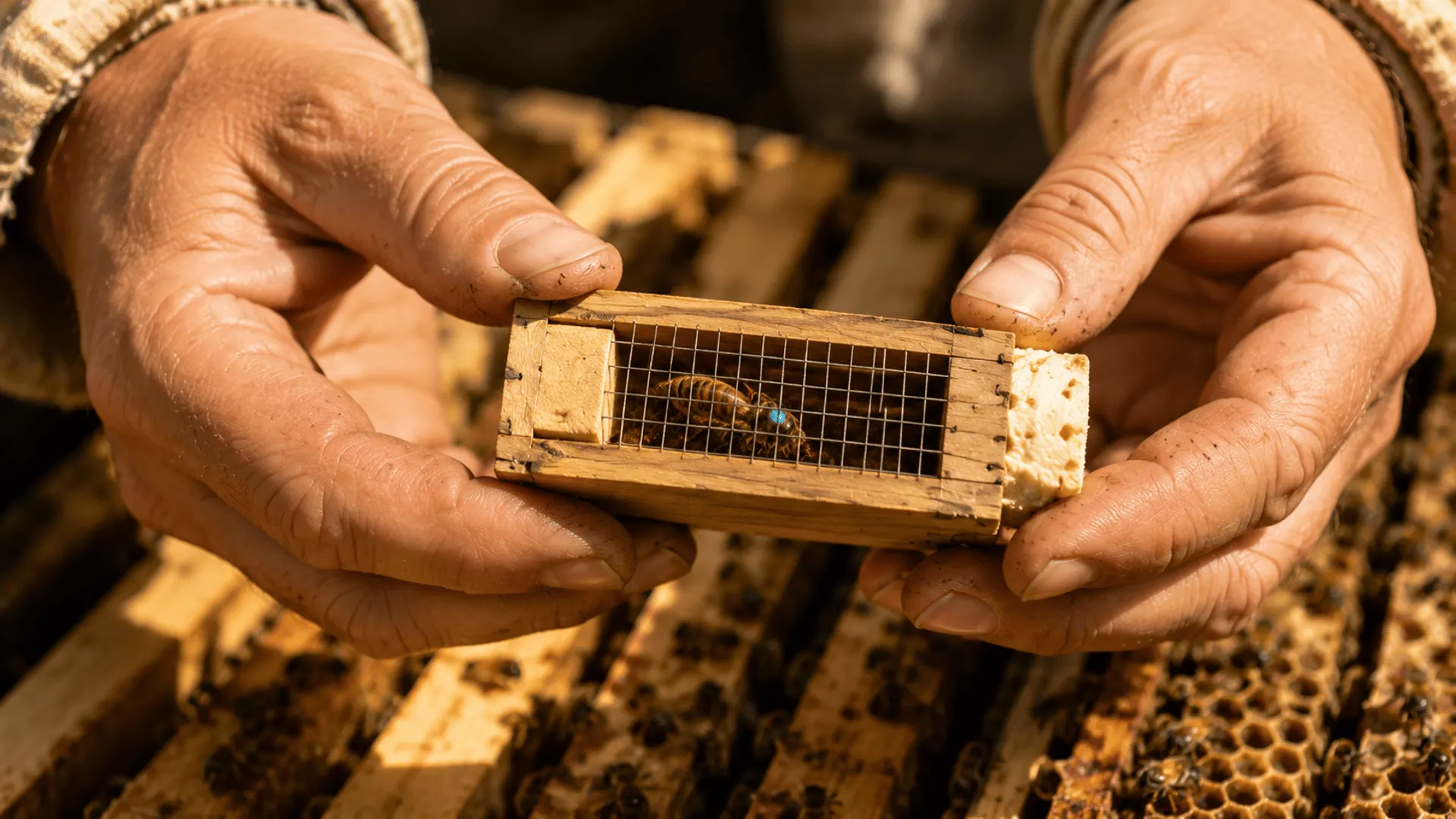
How to Introduce a Queen Bee: Step-by-Step Cage Method
How to introduce a new queen bee with the cage method: prepare the colony, place the cage, when to check, how to confirm acceptance and what to do if she fails.
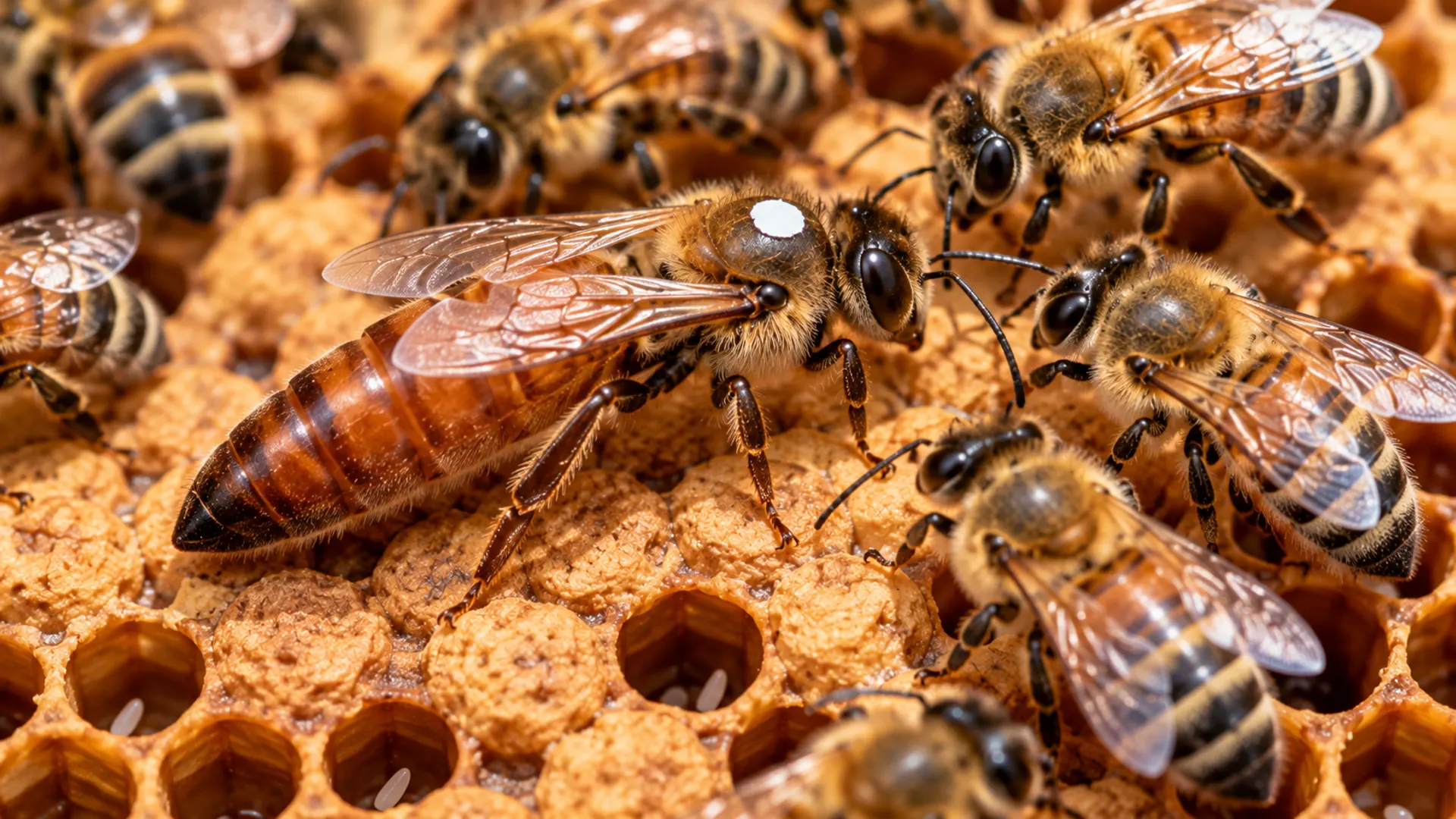
Queen Bee: What She Does, Lifespan, Size and Mating
The queen bee explained: what she does, how a queen is made, mating flights, how long she lives, how big she is next to workers and drones, and how to spot her.