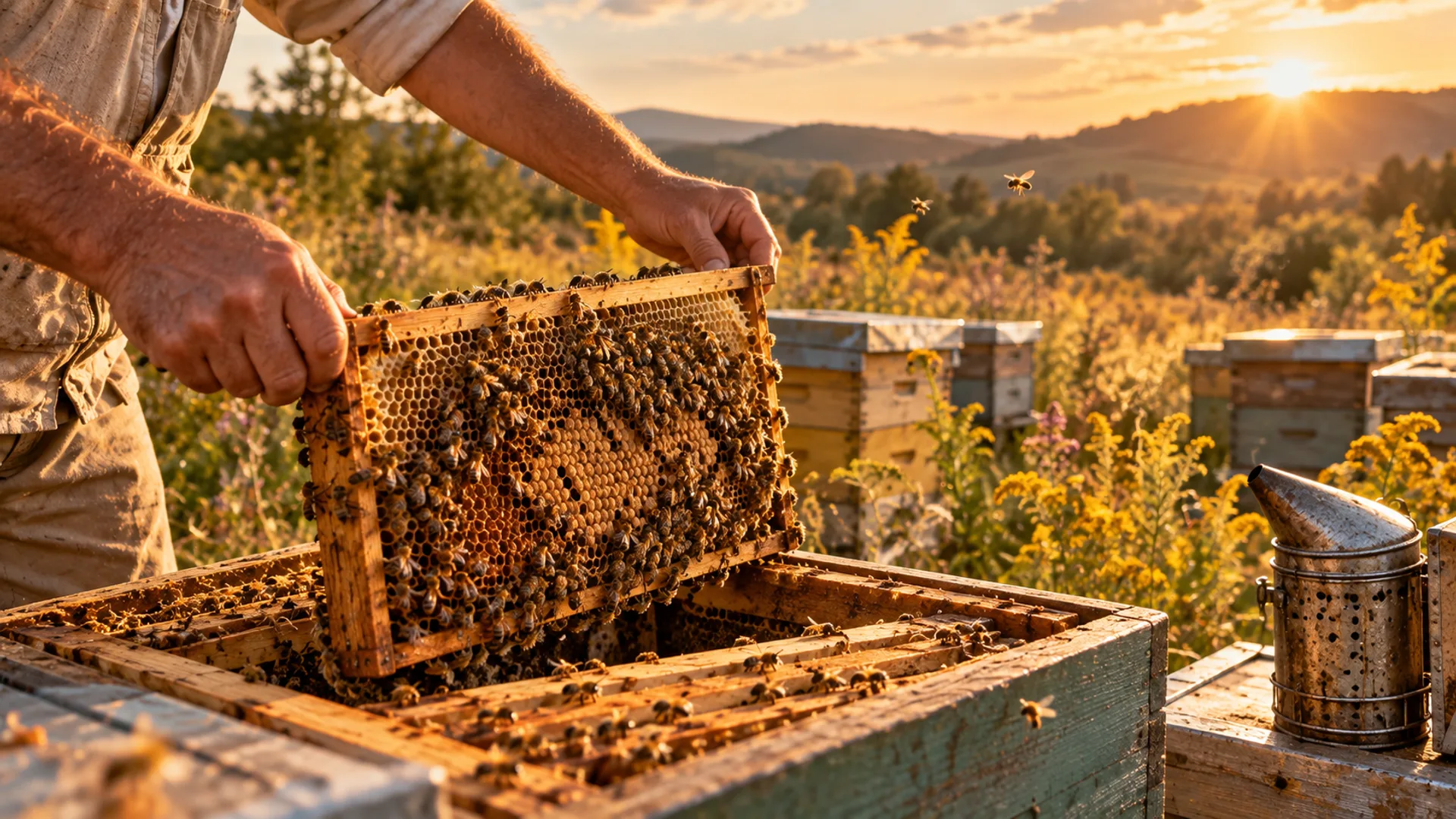
Requeening in Late Summer: July, August or September?
Requeening in late summer: the best month for your climate, step-by-step methods, how to time varroa treatment, and what to do if the queen isn't accepted.
Quick answer: Late summer is one of the best times to requeen. Aim for July or August, and finish by early September in most continental climates, so the new queen lays for several weeks before brood rearing winds down. Remove the old queen, introduce the new mated queen in a candy cage between brood frames, leave the hive closed for 5–7 days, then look for eggs. Plan the swap around your varroa treatment, never in the middle of it.
Spring gets all the attention, but many experienced beekeepers do their main requeening after the honey harvest. The colony is past its peak, the old queen has shown what she can (or can’t) do, and a young queen put in now shapes the bees that will carry the colony through winter.
This guide is about when and why to requeen in late summer: the timing month by month, the three common situations (production colony, nucleus, combining), the late-summer precautions, and how to fit it all around varroa control. The cage technique itself has its own guide on how to introduce a queen.
Why late summer is a classic requeening window
Winter bees. The bees that overwinter are raised from late summer into autumn. They live for months instead of weeks, and the colony’s chance of reaching spring depends on how many healthy ones it raises. A young, well-mated queen usually keeps laying steadily into autumn, while an old or failing one often slows down early.
Less swarming next spring. Colonies headed by a queen in her first full season are generally less inclined to swarm than colonies with a two- or three-year-old queen. Requeening in late summer gives you that young queen before the next swarm season starts. To keep track of queen age, see our guide to queen marking colours.
You know which colonies need it. By July you have a full season of observation: temper, brood pattern, honey yield, how the colony handled the spring. Replacing the weakest queens now is a decision based on evidence rather than guesswork.
The colony is easier to work. After the main flow, the brood nest shrinks and the population drops. Finding the old queen in a smaller colony is much quicker than in a boiling June hive.
Month by month: July, August, September
The right date depends more on your climate than on the calendar. The rule of thumb: the new queen should be laying for at least two full brood cycles (a worker takes 21 days from egg to emergence, so roughly six weeks) before the colony stops rearing brood for winter.
| Month | Advantages | Risks to manage |
|---|---|---|
| July | Plenty of time before winter; drones still present; colony still strong and warm | Flow may still be on, so the old queen is harder to find; honey supers in the way |
| August | Classic window after harvest; new queen raises the winter bees; fits well with summer varroa treatment | Nectar dearth and robbing; hot weather; treatment timing must be planned |
| September | Still workable in mild climates; small colonies easy to inspect | Cold nights, shrinking brood nest, little time for the queen to build up; too late in cool or high areas |
How late is too late?
- Cool, northern or mountain areas: aim to have the new queen laying by mid-August.
- Continental lowlands (much of Central Europe and Romania): August is ideal, the first days of September are usually the limit.
- Mild maritime or southern climates: September can still work, as long as nights stay mild and there is some forage or feeding.
If you are late, a smaller colony with a young queen that has only laid for a few weeks is often better off united with a neighbour than overwintered alone.
Risks specific to late summer
- Dearth and robbing. An open hive in a nectar gap attracts robbers within minutes. Work quickly, reduce entrances, feed in the evening and never spill syrup.
- Varroa. Mite numbers peak in late summer, exactly when winter bees are raised. Requeening must not push the treatment back by weeks.
- Broodless periods. Between removing the old queen and the new one laying, there is a gap in laying of one to two weeks. Capped brood is still present, so the colony is not broodless. Late in the season, every week without eggs costs winter bees.
- Cold nights. A caged queen in a small cluster can get chilled. Place the cage in the centre of the brood nest and avoid introducing on a cold, windy day.
Three situations, three approaches
Requeening a production colony
The most common case. The old queen is removed and the new one is introduced in a cage directly into the colony. Large colonies with many older foragers are the least accepting, so give yourself the best conditions: work after the flow, feed lightly if there is no forage, and keep the hive calm.
Requeening a nucleus or split
Nucleus colonies made from young bees accept a new queen more readily than full-size colonies. Many beekeepers make up nucs in July, introduce the new queen there, and overwinter them as reserve colonies. A nuc made in late summer needs enough bees, stores and time to build up: in cool areas, July is better than late August.
Requeening by combining
The gentlest route for a valuable queen: introduce her into a nuc first, wait until she is laying, then remove the old queen from the production colony and unite the two, for example with a sheet of newspaper between the boxes. The laying queen arrives with her own bees and brood, which usually makes the union smooth. This also works when a late colony is too weak to winter alone.
Step by step: requeening in late summer
1. Prepare the colony
A few days before, reduce the entrance and, if there is no forage, start light feeding with 1:1 syrup. Have the new queen’s delivery date confirmed, so the colony isn’t queenless for longer than necessary.
2. Find and remove the old queen
Search the brood frames calmly with little smoke. If she is hard to find, a queen excluder helps: split the brood frames between two boxes with the excluder in between, then check after 3–4 days which box has fresh eggs. That’s where she is.
3. Wait about 24 hours
Removing the old queen the day before gives the colony time to notice she is gone. Do not leave it much longer: within a day or two the bees start emergency queen cells (you break these down at the 5–7-day check), and after about three weeks without open brood, laying workers can develop.
4. Introduce the new queen
Introduce her in a candy cage between brood frames and keep the hive closed for 5–7 days, as described in our guide on how to introduce a queen, which also covers attendant bees. In late summer, place the cage in the warm centre of the brood nest because of cold nights, choose a calm, mild day, and avoid direct release, since foragers are more defensive during a dearth.
5. Check at 5–7 days and break down emergency cells
Open quickly and keep the entrance reduced, so the inspection doesn’t set off robbing. Eggs in worker cells mean she has been accepted. Break down every queen cell you find: the colony starts emergency cells within a day or two of losing its queen.
6. Continue varroa control
Once the queen is accepted and laying, resume or start your treatment according to plan (see below).
Afterwards: checks and what to do if it fails
Give the queen 2–3 weeks to settle into a regular laying pattern before judging her. A few signs to check:
- Eggs and young larvae in a compact pattern: accepted and laying.
- Queen cells and no eggs after 7–10 days: she has probably been lost.
- Balling (a tight knot of bees around the queen): act immediately, recage her and give the colony more time.
If the introduction fails, give the colony a frame with eggs and young larvae from another hive. If they build queen cells, they are truly queenless, and you can break down the cells and introduce another queen. Late in the season, uniting with a queenright colony is often the more sensible choice than a second attempt. Signs of queenlessness and laying workers are also covered in our guide on how to introduce a queen.
Requeening and varroa: timing both
Requeening and varroa control are best planned together. A few general, well-established principles:
- Use the brood break. Treatments that only reach mites on adult bees work best when there is no capped brood. A colony is only broodless about three weeks after the last egg was laid, so the short gap during requeening is not enough. For a true brood break, cage the old queen for about 24 days, treat the then broodless colony, and introduce the new queen afterwards.
- Don’t treat and introduce at the same time with strong-smelling or evaporating treatments. They can disturb acceptance and may harm the queen. Follow the product label and separate the two steps.
- Treat on time. A new queen does not fix a heavy mite load. The winter bees raised in August and September must develop in a low-mite colony.
- Check mite levels before and after, with a sugar roll, alcohol wash or sticky board count.
Ask your local beekeeping association or veterinary service which treatments are authorised in your country.
Get your queens in time
Late-summer requeening only works if the queen is on hand when the colony is ready. Our naturally mated Carnica and Buckfast queens ship from May to August, with delivery across Romania in 1–3 working days and to the EU in 2–5 working days. August is our last delivery month, so for late-summer requeening reserve early in the season. Pre-orders for the next season open in September and are served in order of reservation.
To compare costs with other options, read our queen bee price guide. See prices and availability on the queens page, and reserve by WhatsApp or phone via our contact page.
Frequently Asked Questions
When is the best time to requeen in late summer?
In late summer, July or August is ideal, and in most continental climates early September is the limit. The new queen should lay for about six weeks before the colony stops rearing brood for winter.
How long does the queen stay in the introduction cage?
The bees eat through the candy plug in a few days and release her themselves. Keep the hive closed for 5–7 days, then check for eggs.
Should I remove the attendant bees before introducing a queen?
Both approaches are common. Some beekeepers remove the attendants because the colony may treat them as strangers. If you do, work indoors near a closed window so the queen can't fly off.
Can I requeen and treat for varroa at the same time?
Avoid introducing a queen during strong-smelling or evaporating treatments, as they can disturb acceptance and harm the queen. Separate treatment and introduction in time and follow the product label.
What should I do if the new queen is not accepted?
Give the colony a frame with eggs and young larvae. If they raise queen cells, the colony is queenless and you can introduce another queen. Late in the season, uniting with a queenright colony is often the better choice.
Related articles
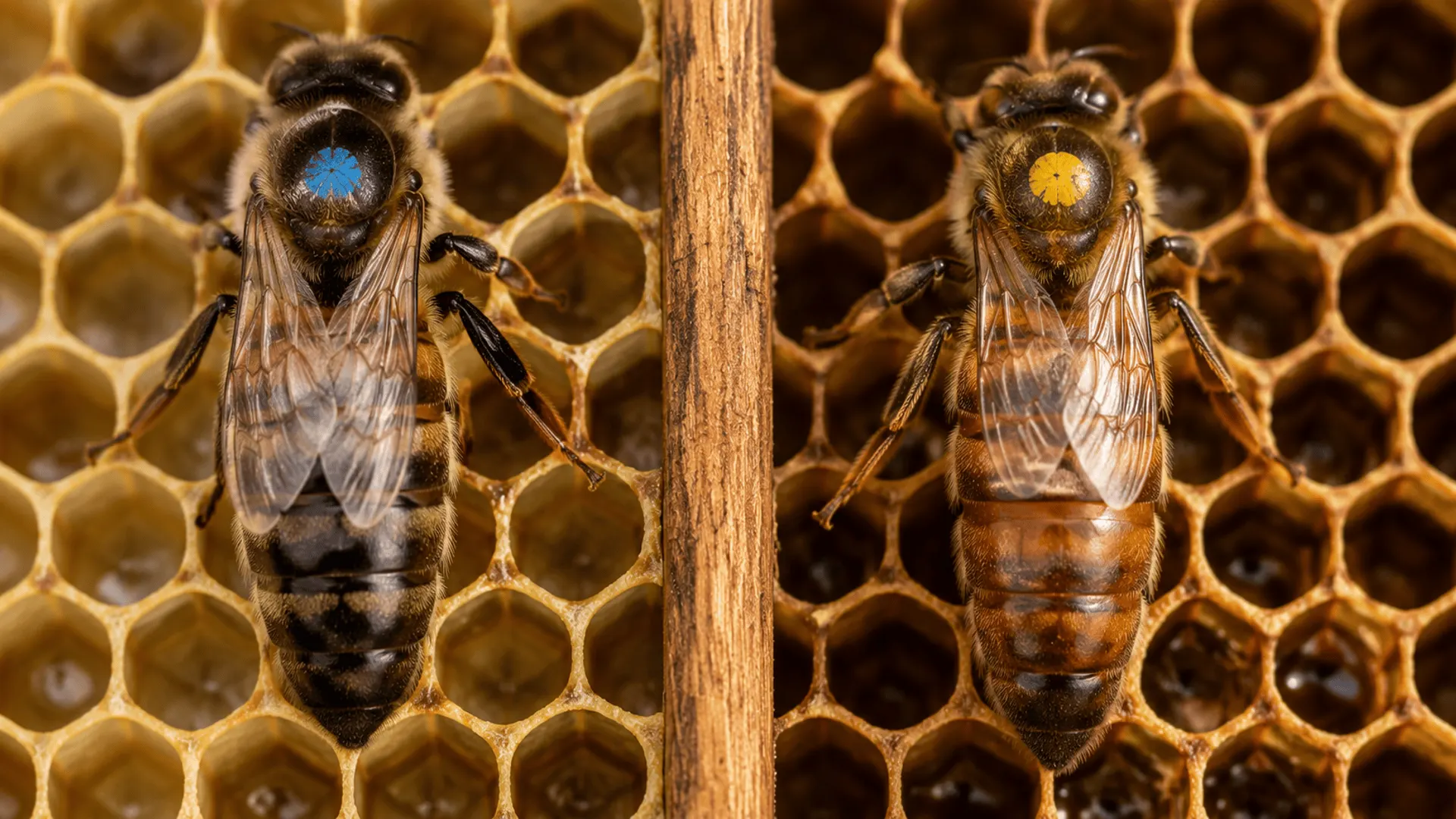
Carnica vs Buckfast: Which Queen Bee Suits Your Apiary?
Carnica vs Buckfast bees compared: temperament, honey yield, wintering, swarming and varroa. Which breed fits your climate, nectar flows and experience?
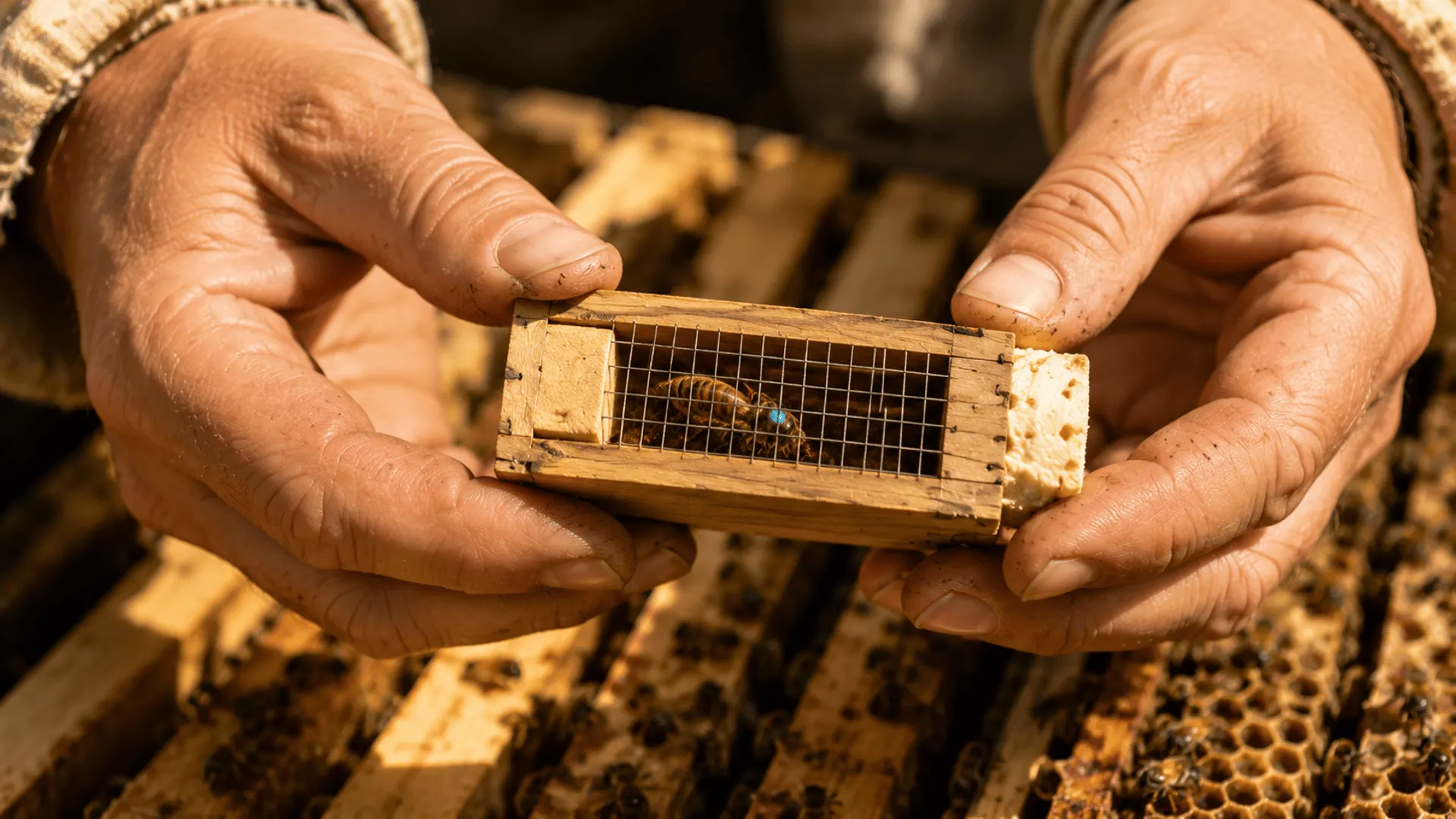
How to Introduce a Queen Bee: Step-by-Step Cage Method
How to introduce a new queen bee with the cage method: prepare the colony, place the cage, when to check, how to confirm acceptance and what to do if she fails.
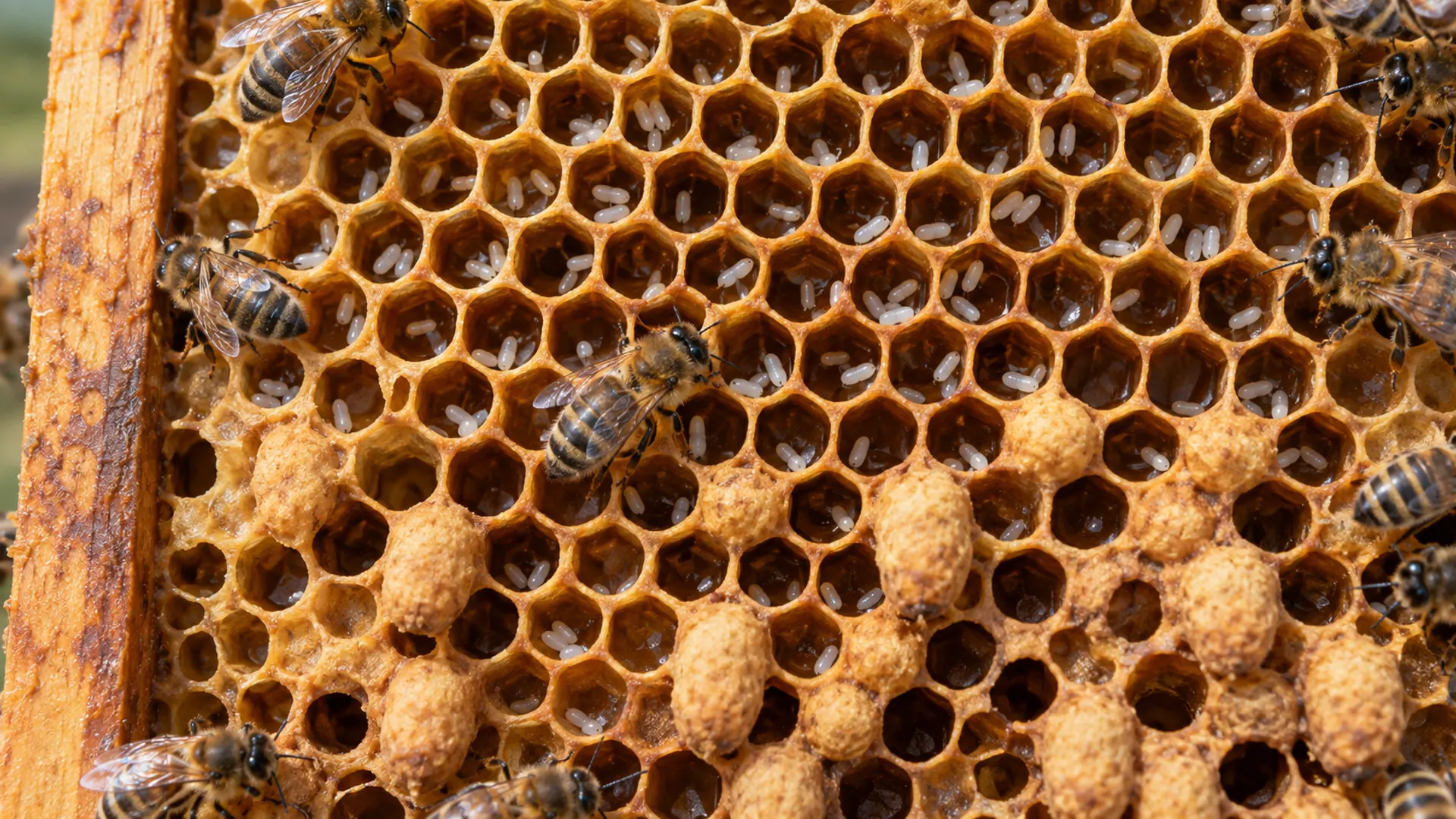
Laying Workers: How to Spot Them and Save the Colony
Laying workers or a drone-laying queen? How to tell them apart, why laying worker bees reject a new queen, and four methods that work to save the colony.