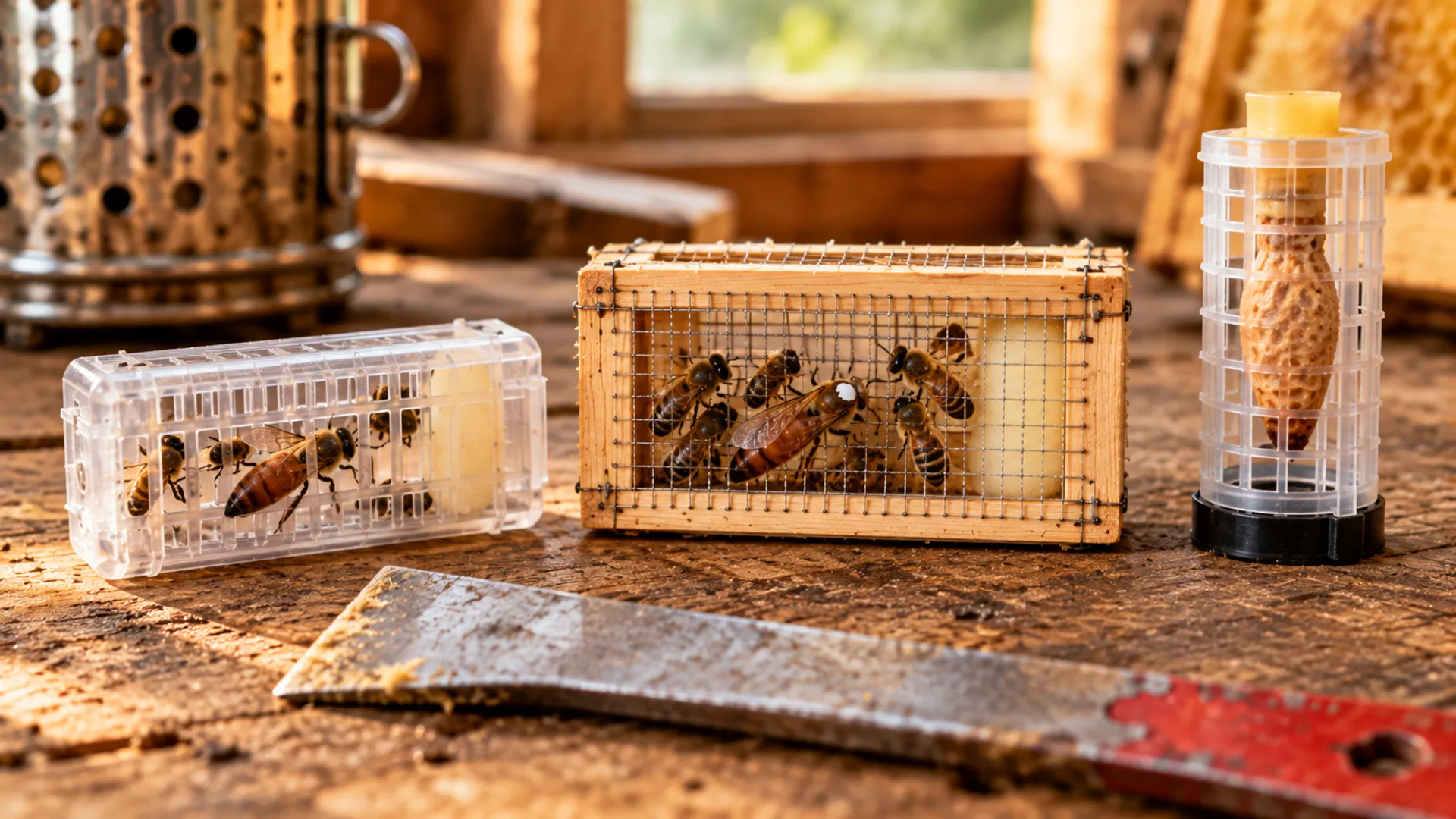
Queen Bee Price in Europe: How Much Does a Queen Cost?
How much does a queen bee cost in Europe? Price ranges by type, from virgin to inseminated, plus shipping, bulk discounts and how to choose what to pay for.
Quick answer: In Europe in 2026, a queen bee typically costs about €8–20 unmated, €20–40 open-mated (F1), €60–110 mated at a certified mating station, €120–175 instrumentally inseminated and €140–220 or more for island-mated or breeder queens. Add shipping (roughly €7–15 domestic, €20–60 for cross-border express). The right price depends less on the queen than on what the colony has to do for you next year.
“How much is a queen bee?” sounds like a question with one answer. It isn’t. Two queens that look identical in the cage can differ tenfold in price, and both prices can be fair. What you pay for is mostly invisible: where she mated, how much the breeder controlled the drones, and how predictable her daughters and workers will be.
This guide breaks down 2026 market prices by queen type, the costs that come on top, and how to decide which tier makes sense for your apiary. The figures are typical ranges gathered from European breeders and classifieds in 2026, not quotes from any single seller.
What actually drives the price of a queen
Every queen goes through the same biology: 16 days from egg to emergence, a few days of maturing, one or more mating flights, then the start of laying. The price differences come from what the breeder adds around that process.
- Mating control. A virgin queen mates with many drones in the air. Who those drones are decides the temperament and behaviour of the workers she produces. Open mating costs the breeder nothing extra; a remote, isolated mating station costs a lot in transport, labour and lost queens.
- Proof. A queen with documented parentage (a certified station, an island, instrumental insemination) carries paperwork that a breeding programme can use. That traceability is priced in.
- Selection work behind the mother. Years of testing colonies before choosing a breeder queen are spread across every daughter sold.
- Losses. Not every virgin comes back from her mating flight. The further and higher the station, the more queens a breeder loses and the more the survivors have to cost.
- Timing. Early-season queens (May and early June) are in short supply and sell out first. Urgent or fast delivery often costs more.
Queen bee price comparison by type (2026)
| Queen type | What you get | Typical 2026 price |
|---|---|---|
| Virgin (unmated) | Young queen that still has to mate in your apiary | about €8–20 |
| Queen cell | Capped cell, the queen has not emerged yet | usually under €10 where offered, rarely shipped |
| Open-mated / F1 | Daughter of a selected mother, mated with local drones | about €20–40 (UK about £40–60) |
| Mated at a semi-isolation mountain station | Selected mother, mated in an area saturated with chosen drones, but not fully isolated | about €25–40 |
| Mated at a reproductive-isolation station (>90%) | Remote station where the chosen drones dominate the mating area | typically between F1 and certified-station prices |
| Certified mating station, island-mated (F0) or breeder queen | Documented drone source, often with pedigree papers | about €60–110 certified station; €140–220 island F0; breeder queens up to €450 |
| Instrumentally inseminated | Controlled mating with semen from known drones | about €120–175 |
A few regional notes from 2026 prices: in Switzerland open-mated queens run about CHF 36–50 and inseminated queens about CHF 80. In the Netherlands and Belgium, F1 queens are often €35–60. In Romania, mated queens from breeders usually cost 55–140 lei (roughly €11–28), and inseminated F0 queens around 600 lei.
If the difference between the middle rows is unclear, read our explainer on semi-isolation vs reproductive isolation. It explains what the drone situation at each type of station means for your colonies.
Costs that come on top of the queen
Shipping
Queens travel by post or courier in small cages with attendant bees and candy. Typical 2026 costs:
- Domestic shipping: about €7–15 in Germany, similar in most EU countries.
- Cross-border express courier: about €20–60, depending on distance and speed.
Because shipping is charged per parcel, not per queen, it matters most when you buy one or two. On a single €22 queen, a €30 courier can more than double the real cost. On ten queens, it is a small line item.
Health certificate paperwork
Moving live bees, queens included, between EU member states is regulated. The European Commission states that bee movements between Member States fall under Regulation (EU) 2016/429 and Delegated Regulation (EU) 2020/688, with the animal health certificates laid down in Implementing Regulation (EU) 2021/403. In practice this adds a veterinary check and paperwork to cross-border orders. Ask any seller how they handle it before you order from abroad.
Replacement and losses
Check what happens if a queen arrives dead. Many sellers replace a dead-on-arrival queen if you document it quickly. Nobody can guarantee that your colony will accept her, because that depends on how she is introduced.
Quantity discounts
Almost every breeder lowers the unit price with volume. Across the market in 2026, a typical structure drops the price by around 15–30% between a single queen and orders of 10, 50 or 100.
For example, our own price tiers for 1–5 / 6–15 / 16–30 / 31+ queens are:
| Line | 1–5 | 6–15 | 16–30 | 31+ |
|---|---|---|---|---|
| Semi-isolation (Carnica or Buckfast) | €22 | €21 | €20 | €18 |
| Reproductive isolation >90% (selected Buckfast) | €40 | €38 | €36 | €34 |
If you know other beekeepers in your area, a shared order is the easiest way to reach a better tier and split one shipping fee.
Why cheap queens can end up costing more
A low sticker price is only a saving if the queen does her job. The real cost of a queen is the price plus everything that happens if she fails.
Acceptance failures
A queen that is killed during introduction costs you more than her price. The colony loses weeks: a replacement has to be ordered, shipped and introduced, and meanwhile no new brood is laid. A virgin queen or a queen cell adds another risk. She still has to survive her mating flights in your apiary, and in bad weather she may not. Good introduction technique matters more than the price; see our step-by-step guide on how to introduce a queen.
Aggressive F2 generations
This is the classic trap with open-mated Buckfast and other crossed lines. An F1 queen may head a gentle, productive colony. But if that colony raises its own replacement queen, she mates with whatever drones fly nearby, and the next generation (F2) can be noticeably defensive and unpredictable. A cheap queen that leads to an aggressive colony a year later is expensive in time, stings and lost enjoyment.
Poor mating and early supersedure
A queen that was poorly mated, or mated with too few drones, may lay a patchy brood pattern and be superseded by the bees within months. You paid for a full season and got half of one.
None of this means expensive queens never fail. It means that the risk you take on gets smaller as mating control improves, and you should weigh that risk against the price difference.
How to decide what to pay for
Hobbyist with a few colonies
If you keep one to five hives for pleasure and a bit of honey, an open-mated F1 or a semi-isolation queen is usually enough. Plan to requeen every one or two years from a breeder, rather than letting colonies raise their own queens, to avoid the F2 problem. Prioritise gentle temperament; the right breed matters too, see Carnica vs Buckfast.
Production apiary
With dozens or hundreds of colonies, uniformity pays. Colonies that behave alike are faster to work, easier to plan for and produce more predictable harvests. This is where reproductive-isolation queens earn their higher price: you pay a little more per queen for a narrower range of outcomes across the whole apiary. Buy in volume to reach the lower tiers.
Breeding programme
If you raise your own queens and want to keep a line stable, you need known drone origin and, usually, pedigree documentation. Certified station, island-mated F0 or inseminated breeder queens are the right purchase here, even at €100–450. You buy a few and graft from them, so their cost is spread over many daughters.
| Your situation | Sensible tier | Rough budget per queen (2026) |
|---|---|---|
| 1–5 hives, hobby | Open-mated F1 or semi-isolation | €20–40 |
| Production apiary | Reproductive isolation, bought in volume | €35–60 |
| Breeding / grafting stock | Certified station, island F0, inseminated | €100–450 |
Where our queens sit in these ranges
Bienen Königin is a queen breeder in Maramureș, Romania, raising queens since 2016. We offer two lines, both naturally mated:
- Semi-isolation queens (Carnica and Buckfast), mated at our mountain station at about 800–900 m and marked. At €18–22 they sit at the lower end of the open-mated market, with more drone control than typical open mating. First deliveries: 15–30 May.
- Reproductive-isolation queens (selected Buckfast), mated at an isolated station at about 1400 m with >90% reproductive isolation, in limited numbers. At €34–40 they sit between typical F1 prices (~€30) and certified-station queens (€60–110). First deliveries: 5–20 June.
Deliveries continue through June–August. Pre-orders for the next season open in September and are filled in order of reservation. We ship in ventilated transport boxes by express courier: 1–3 working days in Romania, 2–5 working days in the EU. Shipping cost is confirmed when you order. If a queen arrives dead or in poor condition, send a photo via WhatsApp within 48 hours of delivery and we replace her free of charge.
Both lines are naturally mated production queens. If your project needs documented pedigrees for breeding, a certified station or an inseminated breeder queen is the better purchase.
See current queen prices and availability, or message us on WhatsApp to reserve for next season.
Frequently Asked Questions
How much does a queen bee cost?
In Europe in 2026, a queen bee typically costs about €8–20 unmated, €20–40 open-mated (F1), €60–110 from a certified mating station, €120–175 instrumentally inseminated and €140–220 or more island-mated. In the UK, mated F1 queens are usually about £40–60.
Why are some queen bees so much more expensive?
Mostly how well the mating was controlled. Open mating costs the breeder nothing extra, while isolated stations, islands and instrumental insemination add labour, losses and documented parentage, which is what breeding programmes pay for.
Is a cheap queen bee worth buying?
Not necessarily. A cheap queen can cost more if she is rejected at introduction, poorly mated and superseded, or if her colony raises an aggressive F2 replacement queen.
How much does it cost to ship a queen bee?
Shipping is charged per parcel: about €7–15 domestically in Germany and about €20–60 for cross-border express courier in 2026. It matters most when you buy only one or two queens.
Which queen bee should I buy?
For a few hobby hives, an open-mated or semi-isolation queen at about €20–40 is usually enough. Production apiaries benefit from more uniform reproductive-isolation queens, and breeders need certified, island-mated or inseminated queens with documented parentage.
Related articles
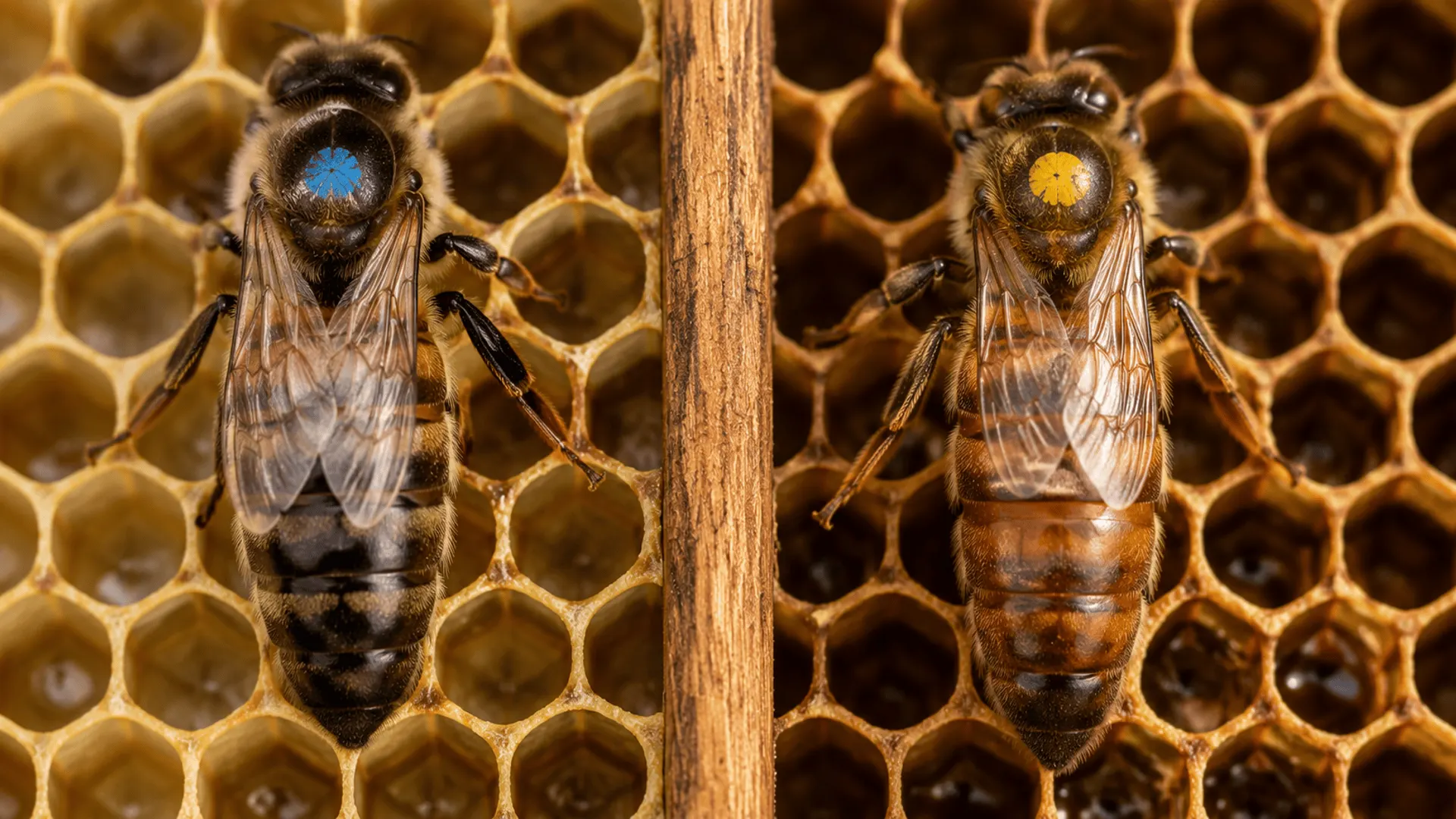
Carnica vs Buckfast: Which Queen Bee Suits Your Apiary?
Carnica vs Buckfast bees compared: temperament, honey yield, wintering, swarming and varroa. Which breed fits your climate, nectar flows and experience?
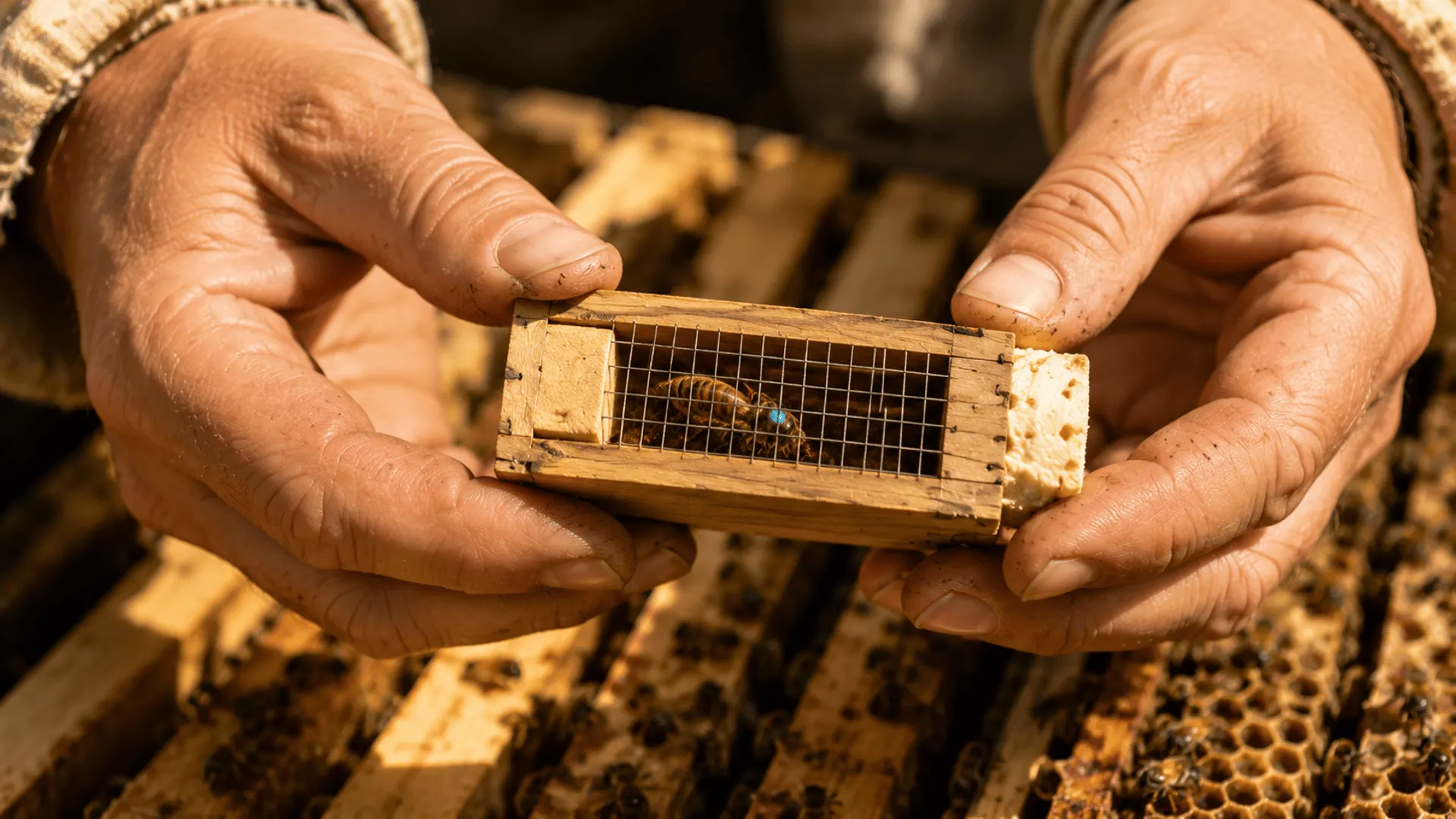
How to Introduce a Queen Bee: Step-by-Step Cage Method
How to introduce a new queen bee with the cage method: prepare the colony, place the cage, when to check, how to confirm acceptance and what to do if she fails.
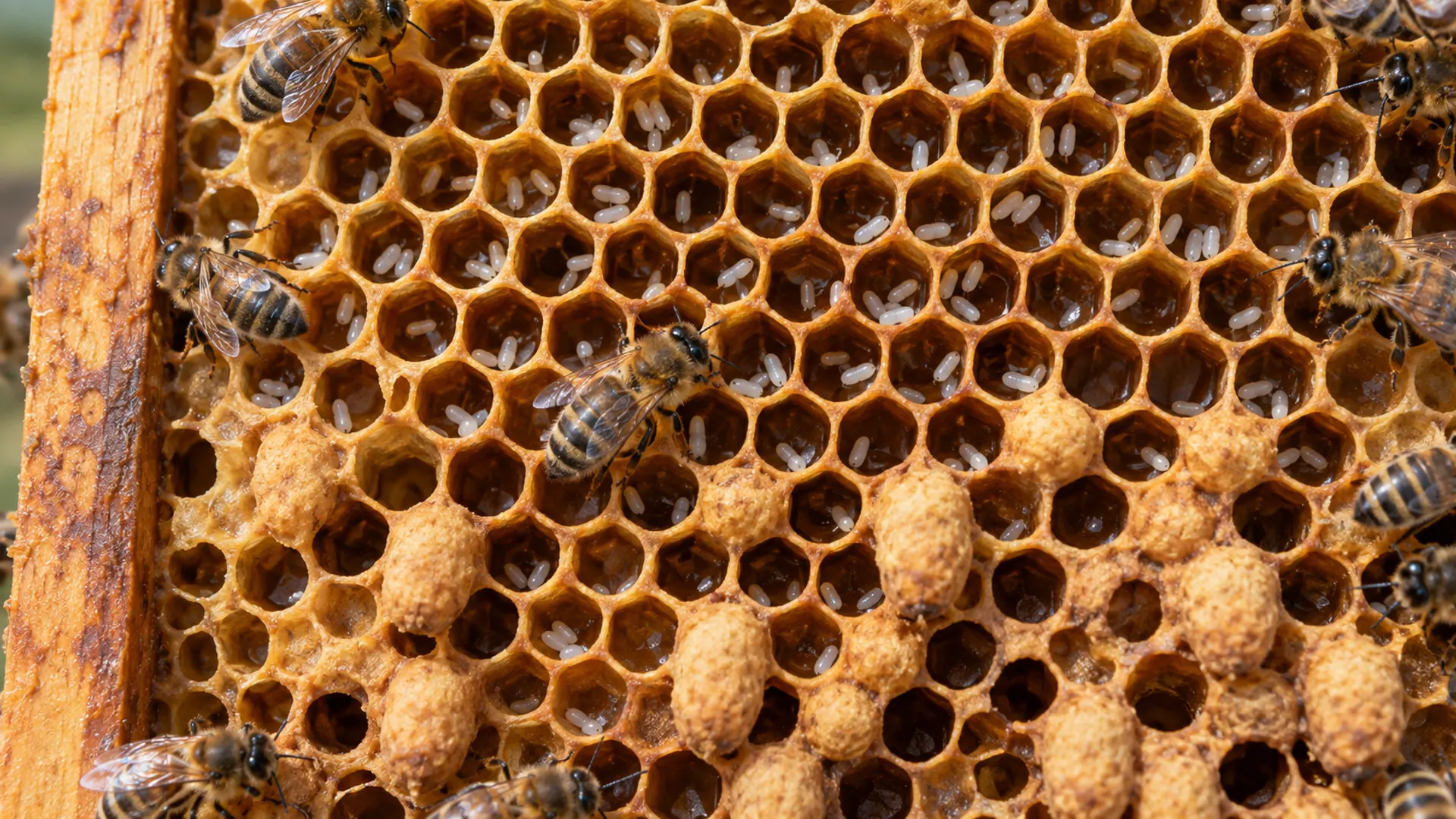
Laying Workers: How to Spot Them and Save the Colony
Laying workers or a drone-laying queen? How to tell them apart, why laying worker bees reject a new queen, and four methods that work to save the colony.