Swarm Cells Found? How to Prevent Swarming with Young Queens
Found swarm cells? How to prevent swarming: weekly inspections, supering, drone frames, the artificial swarm, splits and why young queens swarm less.
Quick answer: colonies headed by a young queen in her first season swarm less, because her pheromone signal reaches the whole colony. Swarm prevention therefore means young queens, supering before the bees run out of room, foundation and a drone frame to draw, an inspection every 7 days in swarm season and splitting strong colonies. If you already find charged swarm cells with eggs or larvae, knocking them down rarely works on its own. An artificial swarm is safer: the old queen goes onto the original site with the flying bees, and the colony with the cells is moved aside.
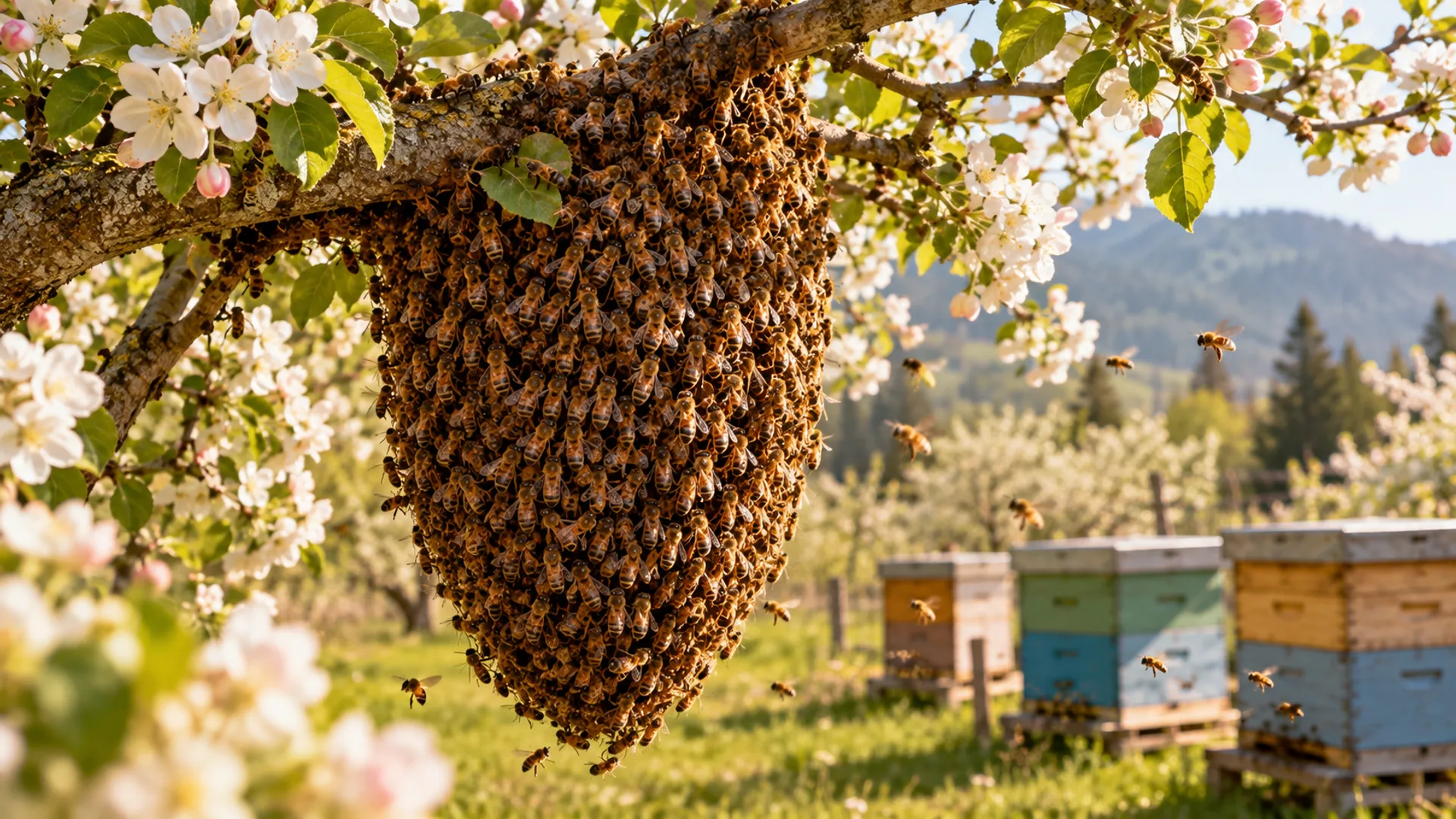
Swarming is how a honey bee colony reproduces. For you as a beekeeper, a swarm in May usually means the colony misses the spring flow, half the bees are hanging in a neighbour’s hedge, and what is left barely gets back to strength before the summer flow. Most swarms can be prevented if you know the signs and act in time, and one of the strongest levers is the age of the queen.
Why colonies with young queens swarm less
A colony holds together through queen pheromones. Workers pass them from bee to bee, and they suppress, among other things, the building of queen cells. As long as the signal reaches every part of the colony, the bees have no reason to rear a new queen.
A young queen produces more pheromone than an older one. The link between queen age and swarming is familiar to beekeepers and has also been measured. A study by Hauser and Lensky in Apidologie (1994) found that colonies with queens aged 7 to 10 months built fewer swarm cells and had more brood, bees and honey than colonies with queens up to 20 months old. The trial ran in a subtropical climate, but the result matches what beekeepers see in Britain and the rest of Europe.
A young queen is not a guarantee. A colony that runs out of space can still get the swarming urge with a new queen. You simply start with a clear advantage.
What triggers the swarming urge
It is rarely a single cause. Usually several factors add up:
| Factor | What happens in the colony |
|---|---|
| Congestion | Lots of young bees, little open brood to feed, nowhere for the queen to lay |
| Brood nest backfilled with honey | The queen runs out of empty cells |
| Older queen | Weaker pheromone signal |
| Poor pheromone distribution | In a very populous, crowded hive the signal no longer reaches every bee |
| Heat, poor ventilation | Overheated hive, bees bearding at the entrance |
| Weather | Wet spells broken by warm days, gaps in the flow |
| Genetics | Some strains swarm far more readily than others |
In Britain and Ireland the swarm season usually runs from late April to the end of June, peaking around fruit blossom and oilseed rape. In the north and in upland apiaries everything shifts a few weeks later.
Weekly inspections in swarm season
A queen cell is capped about eight to nine days after the egg is laid, and the prime swarm usually leaves as soon as the first swarm cells are capped. If you inspect every 7 days through the swarm season, you find the cells while they are still open, before the swarm goes. At 9 days it gets tight, and longer gaps in May and June are asking for trouble.
To keep inspections quick:
- Tilt the top box. On a double brood box, lift the back of the upper box and look at the bottom bars from underneath. That is where most swarm cells are built.
- Tell play cups from charged cells. Empty play cups are present almost all season. It becomes serious when there is an egg or a larva floating in royal jelly.
- Watch the drone frame. If the colony draws it out quickly, it is in building mode. If comb building stalls while there is a flow on, that can be an early sign of the swarming urge.
How to prevent swarming: the measures that work
1. Super before they need it
The most common mistake is adding a super only when the bees already cover everything. Add space as soon as the colony covers most frames and the flow begins, not when bees are bearding at the entrance.
2. Give foundation and a drone frame
Young bees that are drawing comb are busy, and the building urge competes with the swarming urge. During a flow, place frames of foundation at the edge of the brood nest regularly. A drone frame also keeps wax-making bees occupied, and cutting out the capped drone brood is a well-known varroa control measure at the same time.
3. Keep the brood nest open
If stores are backfilled right up to the brood, take out one or two frames of stores and replace them with drawn comb or foundation. Keep those frames for nucs or as a reserve; don’t put them in the super, or winter feed ends up in your honey. The queen needs room to lay.
4. Shade and ventilation
A hive in full June sun heats up fast. Midday shade and good ventilation, for example an open mesh floor, calm things down at the entrance.
5. Split strong colonies
Take two or three frames of brood with their bees from a strong colony and make up a nuc, then introduce a mated queen to it. The production colony is relieved and you gain a colony. Before the main flow, make sure the parent colony stays strong enough to produce a crop.
A more advanced option is the Demaree method: the queen stays in the bottom box on mostly empty comb or foundation, a queen excluder goes on top, and the brood goes into a box at the very top, above the excluder and the supers. Separating the brood from the queen takes the pressure off, but the top box must be checked about a week later and any queen cells removed. It suits beekeepers who want to keep one big colony rather than make increase.
6. Requeen in good time
A queen in her third season is an invitation to swarm. Plan requeening by age and performance, either in spring through splits or after the main flow. The summer option is covered in requeening in late summer.
Swarm cells found: what now?
Not every queen cell is a swarm cell. Telling them apart decides what you do:
| Cell type | Where it sits | How many | What it means |
|---|---|---|---|
| Swarm cell | Bottom bars and edges of the frames | Often many | The colony is preparing to swarm |
| Supersedure cell | On the face of the comb | Few, 1 to 3 | The colony is replacing its queen quietly |
| Emergency cell | On the face of the comb, built from worker cells | Several | The colony has suddenly become queenless |
Charged cells with eggs or young larvae
The colony is in the middle of its preparations. Knocking down the cells on their own rarely works: the bees start new ones within days, you have to go back every 7 days and it is easy to miss one. An artificial swarm (the Pagden method in its basic form) is safer, because it gives the colony what swarming would:
- Move the original hive a few metres to one side.
- On the original site, set up a new hive with the old queen, one frame of open brood without queen cells, and foundation or empty drawn comb for the rest. Put the supers on this hive.
- The flying bees return to the old site and the queen. This colony behaves like a natural swarm and draws comb hard.
- The moved hive keeps the brood and young bees. Leave one good cell with a larva in it or, more safely, knock down all cells and introduce a mated queen in a cage, as described in how to introduce a queen.
- Check the moved hive again after 5 to 7 days and knock down any emergency cells the bees have started since. Otherwise it can still throw a cast with the first queen to emerge.
In the full Pagden method, the moved hive is also shifted to the other side of the original site about a week later, so it loses a second wave of flying bees to the swarm colony and is even less likely to cast.
Capped swarm cells
The prime swarm may already have gone. Look for the old queen and fresh eggs. If both are missing and there are clearly fewer bees on the frames than at the last inspection, the colony has swarmed. Leave one good cell and remove all the others, or casts will follow and weaken the colony further.
If the old queen is still there, for example because bad weather delayed the swarm, make an artificial swarm straight away as described above.
If you would rather introduce a mated queen than keep a cell, remove all cells and first make sure no virgin queen has emerged already. She is small, fast and unmarked, and any queen you introduce alongside her will be killed.
Planning swarm control over the year
The measures have to be in place before swarm season, not halfway through it. In practice: get supers, foundation and drone frames ready in April, inspect weekly from the start of fruit blossom, and make splits at the start of the rape or main spring flow. Nucs made then have time to build up for the summer flow or the autumn, and the production colonies keep their strength.
For next year, look back: which colonies got the swarming urge and which did not? Colonies with a strong tendency to swarm are a poor basis for rearing queens. Note each queen’s age too, so you know which ones to replace first.
Young queens for splits and artificial swarms
With a mated queen, a nuc or the moved half of an artificial swarm comes back into lay fastest, without a mating flight and without weeks of no brood. Bienen Königin has sold naturally mated, marked Carnica and Buckfast queens from Maramureș in Romania since 2016. Queens from our semi-isolation mating station ship from 15 to 30 May, selected Buckfast queens from the isolated station from 5 to 20 June, in order of booking. We don’t sell queen cells or virgin queens. Prices are on our queens page, and you order by WhatsApp or phone.
Frequently Asked Questions
How do you prevent swarming?
Super before the bees run out of room, give foundation and a drone frame to draw, keep the brood nest open, provide shade and ventilation, and split strong colonies. Inspect every 7 days through the swarm season. All of this works best in colonies headed by a young queen.
What should I do if I find swarm cells?
Knocking down charged swarm cells on their own rarely works, because the bees start new ones within days. An artificial swarm is safer: the old queen goes onto the original site with one frame of brood and foundation, and the original hive is moved a few metres aside. In the moved hive, leave one good cell or introduce a mated queen, and check for new emergency cells after 5 to 7 days.
How often should I inspect for swarm cells?
Every 7 days in swarm season. A queen cell is capped about eight to nine days after the egg is laid, and the prime swarm usually leaves as soon as the first swarm cells are capped. With longer gaps you often arrive too late.
Do colonies with young queens swarm less?
Yes, as a rule. A young queen produces more pheromone, so the signal reaches the whole colony. A study by Hauser and Lensky in Apidologie (1994) found fewer swarm cells in colonies with queens aged 7 to 10 months than in colonies with queens up to 20 months old.
How can I tell swarm cells from supersedure cells?
Swarm cells are usually numerous and hang from the bottom bars and edges of the frames. Supersedure cells are few, one to three, on the face of the comb. Emergency cells are built on the face of the comb from worker cells after the colony suddenly loses its queen.
If the swarm cells are capped, has the colony already swarmed?
Possibly. The prime swarm usually leaves around the time the first swarm cells are capped. Look for the old queen and fresh eggs. If both are missing and there are clearly fewer bees, the colony has swarmed: keep one good cell and remove the rest to prevent casts.
Related articles
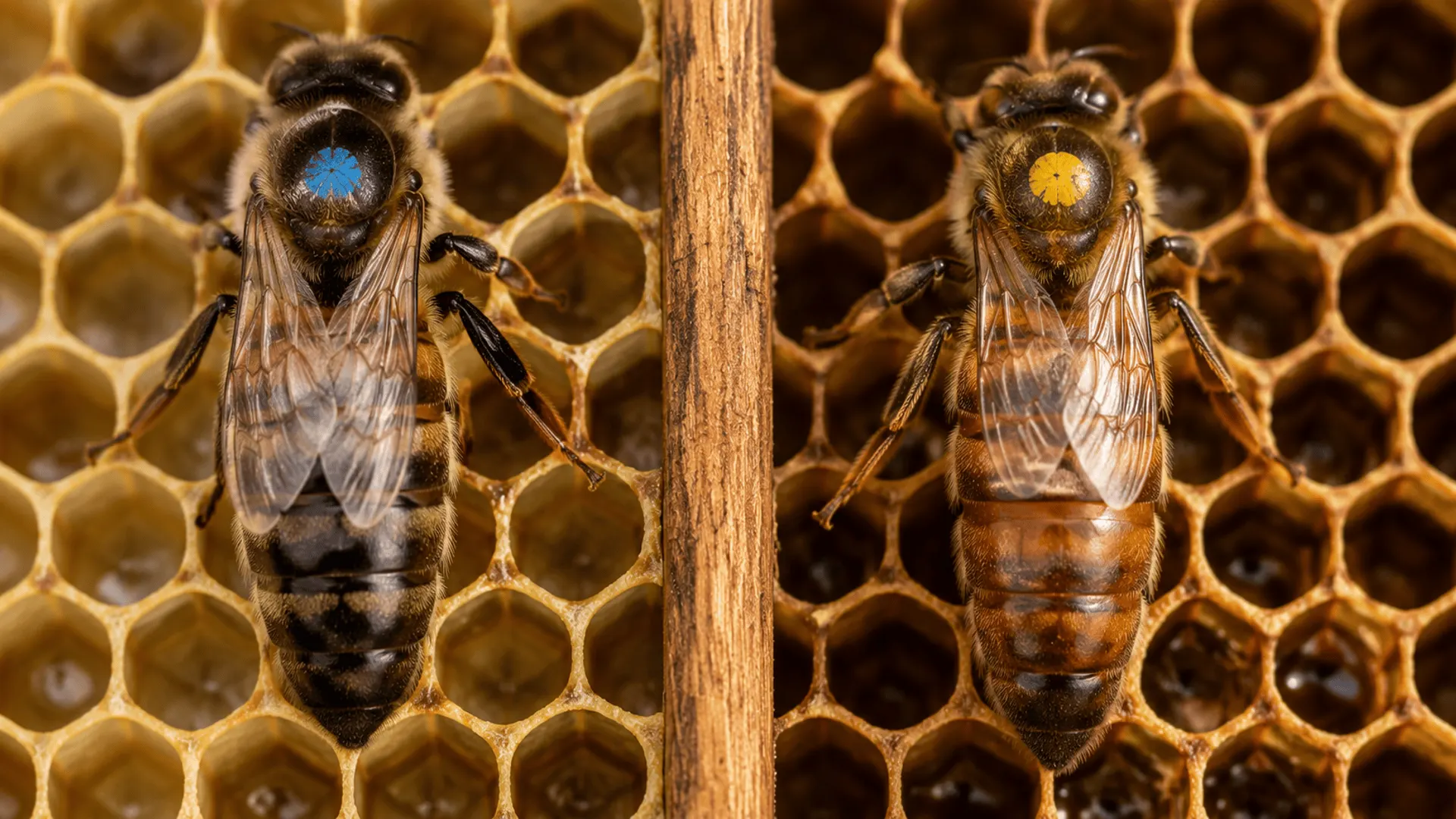
Carnica vs Buckfast: Which Queen Bee Suits Your Apiary?
Carnica vs Buckfast bees compared: temperament, honey yield, wintering, swarming and varroa. Which breed fits your climate, nectar flows and experience?
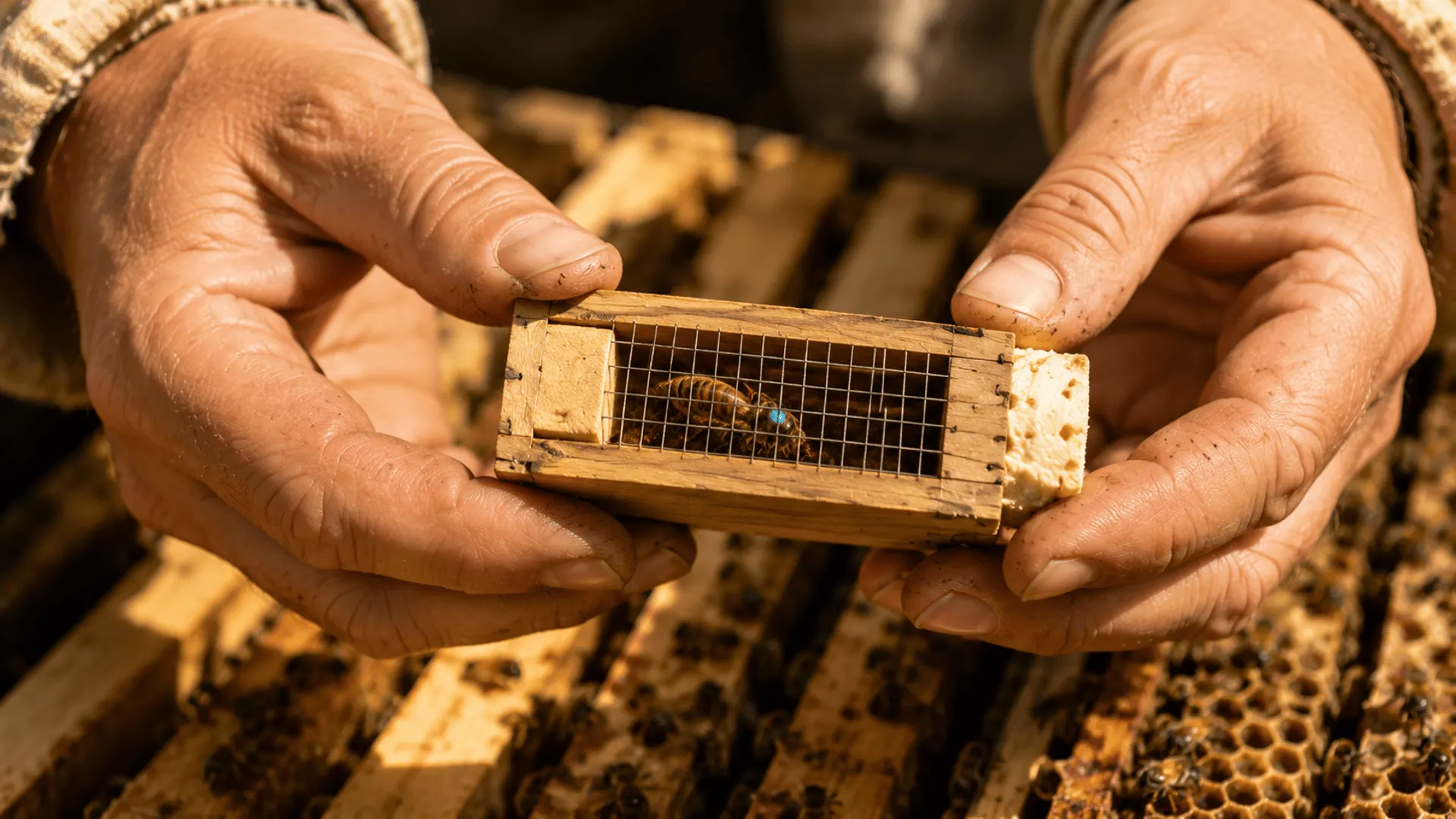
How to Introduce a Queen Bee: Step-by-Step Cage Method
How to introduce a new queen bee with the cage method: prepare the colony, place the cage, when to check, how to confirm acceptance and what to do if she fails.
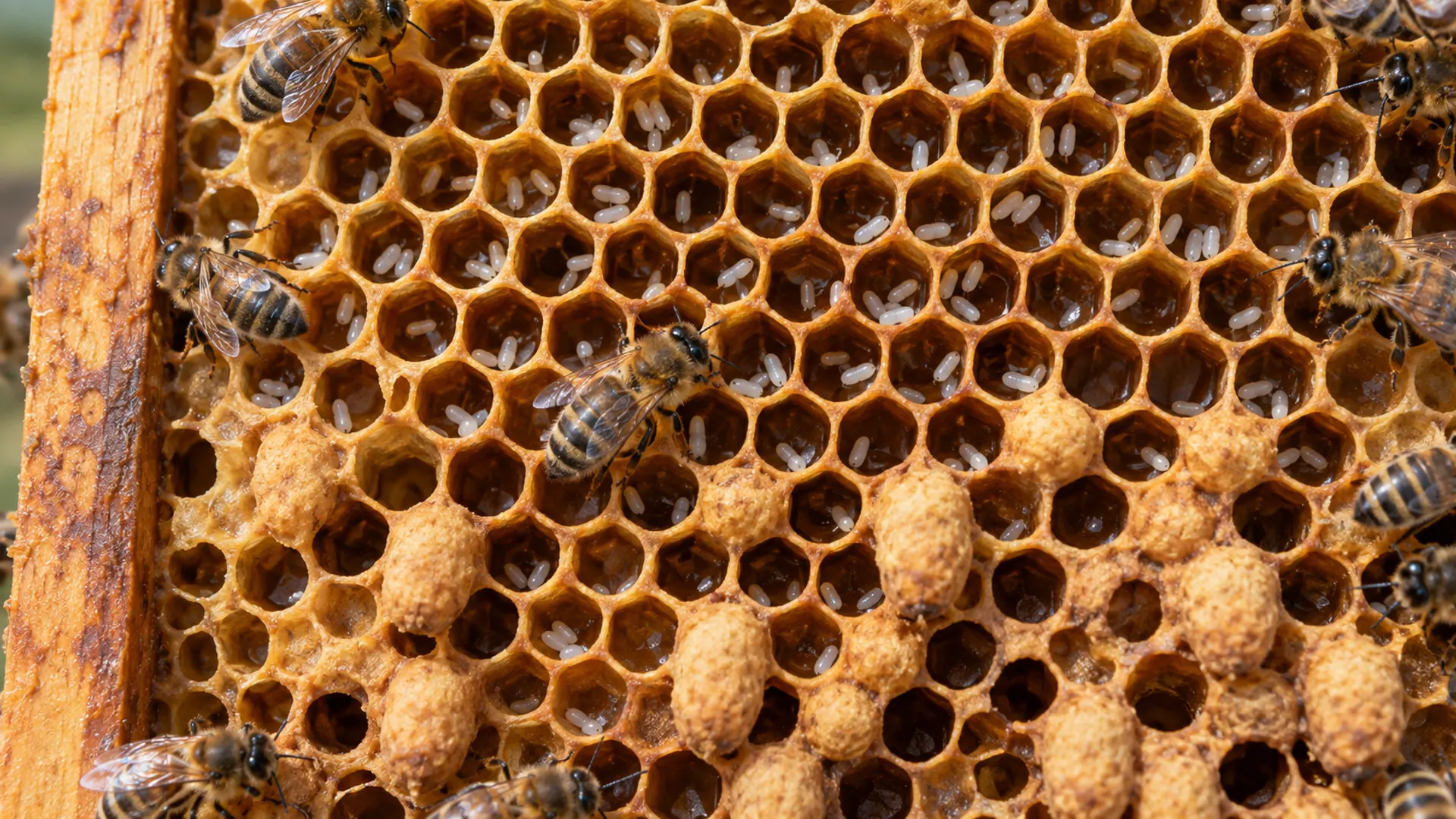
Laying Workers: How to Spot Them and Save the Colony
Laying workers or a drone-laying queen? How to tell them apart, why laying worker bees reject a new queen, and four methods that work to save the colony.