Queen Cell, Virgin Queen or Mated Queen: Which to Buy?
Queen cell, virgin queen or mated queen? Development timeline in days, mating flight risks and which option suits a production colony, a split or a mating nuc.
Quick answer: a mated queen starts laying a few days after release and is the safest choice for a production colony. A virgin queen costs less but still has to survive her mating flights, with all the risks of weather and unknown drones. A queen cell is the cheapest and slowest option: from a ripe cell to the first eggs usually takes two to three weeks, sometimes more. Buy a mated queen for production colonies; a queen cell or a virgin can be enough for splits made in the middle of the season.
“Should I put in a queen cell or just buy a queen?” The question comes up every spring, often with price as the only yardstick. But the three options are not the same product at three prices. They are different stages in the life of a queen. Every stage you skip is paid for either in time and brood inside the colony, or in money to the breeder.
What is a queen cell?
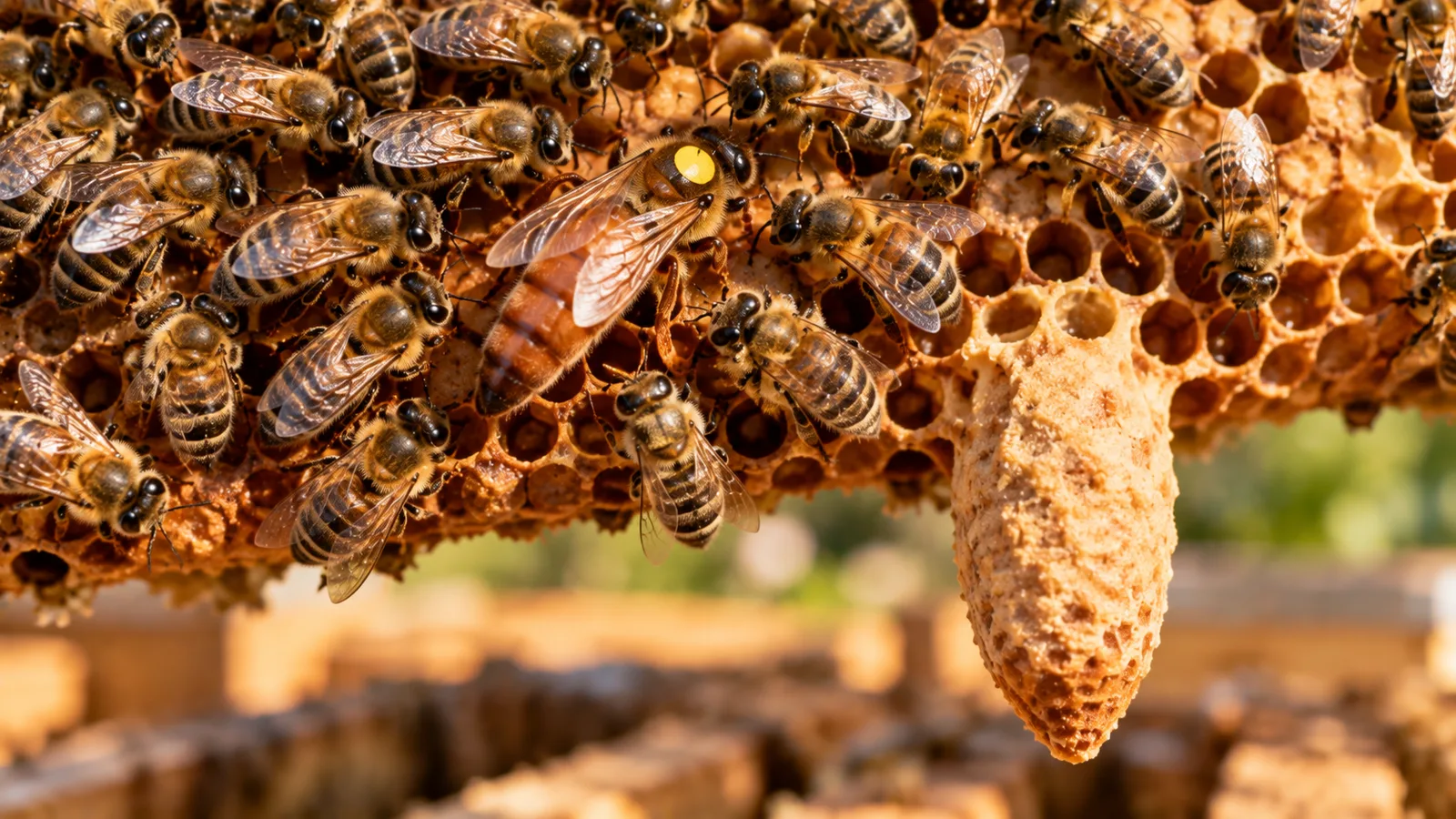
A queen cell is the large, peanut-shaped cell hanging downwards in which a queen develops. Beekeepers distinguish four kinds, and the difference matters, because each tells you something different about the colony:
| Type | Where on the frame | What it means |
|---|---|---|
| Swarm cell | Mostly along the bottom edge and sides of the comb, often several | The colony is preparing to swarm, the old queen is still there |
| Emergency cell | On the face of the comb, built out from a worker cell | The colony has suddenly lost its queen |
| Supersedure cell | One to three cells, usually mid-comb | The bees are quietly replacing a failing queen |
| Grafted cell | On a cell bar frame, in queen cups after grafting | Deliberate queen rearing by the beekeeper |
When people talk about “buying queen cells”, they almost always mean grafted cells: capped, ripe cells a few days before emergence, raised by the breeder from a selected mother.
The three options at a glance
- Queen cell: delivered or collected ripe and capped, then placed in a queenless colony or a mating nuc. The queen emerges inside the hive.
- Virgin queen: already emerged, but has not yet made her mating flights. She arrives in a cage and is introduced like any queen.
- Mated queen: has mated and already laid before being caged and shipped. She is usually marked.
When does the queen emerge? The timeline from egg to laying
The differences in time follow directly from how a queen develops. The figures below are standard reference values from the beekeeping literature (summarised, for example, by Honey Bee Suite); bad weather stretches them.
| Stage | Day (from the egg being laid) | What happens |
|---|---|---|
| Egg | 0 to 3 | The larva hatches on day three |
| Larva | 3 to 8 | Fed generously on royal jelly |
| Cell capped | about 8 to 9 | Start of the pupal stage |
| Emergence | about 16 | The virgin queen leaves the cell |
| Maturing | 16 to 21 | First orientation flights from about day 5 after emergence |
| Mating flights | about 21 to 28 | Only in warm, calm weather |
| Laying begins | about 26 to 30 | 2 to 3 days after mating, usually 10 to 14 days after emergence |
In practice this means:
- Ripe queen cell: the colony waits for emergence, maturing, mating and the start of laying. Expect about two to three weeks to the first eggs, sometimes longer.
- Virgin queen: once accepted, she still has to mature and mate. In good weather, roughly ten days to two weeks until she lays.
- Mated queen: she lays within a few days of release from the cage.
Why a mated queen saves a brood cycle
A worker takes 21 days from egg to emergence. The two to three weeks without laying that a queen cell costs, compared with a mated queen, therefore add up to roughly one full brood cycle. During that time:
- no young bees emerge to replace the ones that age and die;
- the colony goes into the next flow weaker;
- the risk of a colony staying queenless without you noticing goes up if the young queen fails to return from her mating flight.
A good queen lays well over a thousand eggs a day at the height of the season. Three weeks without laying shows up about six weeks later as a gap in the foraging force, often just as the flow starts. So compare the price gap between a queen cell and a mated queen with that loss, not just with each other.
The risks of each option
The mating flight
A virgin queen, and a queen from a queen cell, must fly out, find a drone congregation area and come back. On the way a bird can take her, she can get lost or drift into the wrong hive. If she doesn’t return, the colony is queenless and often has no young larvae left to raise emergency cells of its own.
The weather
Mating flights need warm, sunny, still days. A wet week in June can delay mating considerably. A queen that isn’t mated in her first weeks of life may become a drone layer: she lays only unfertilised eggs, which develop into drones.
The drones
A queen mated in your apiary pairs with whatever drones are flying locally, including those from neighbouring apiaries whose origin and temperament you don’t know. The mother’s side is known; the father’s side is a gamble. Queens from remote mating stations shrink that gamble considerably, as explained in our comparison of semi-isolation and reproductive isolation.
Acceptance
A queen cell is usually accepted well by a queenless colony, because the queen emerges in the hive and takes on its scent. The condition is that the colony has no emergency cells of its own left, otherwise the foreign cell is often torn down. A cell protector helps. A virgin that has already emerged is harder to get accepted than a mated queen, which is laying and giving off plenty of pheromone. A mated queen is introduced in a cage with a candy plug, as described in our guide on how to introduce a queen. Whichever option you choose, acceptance depends heavily on the state of the colony and on how you work.
Transport
Queen cells are sensitive to knocks and chilling and don’t travel well over long distances. If you buy a queen cell, collect it yourself from a breeder nearby, keep it warm and steady on the journey and put it in the same day. Queens, mated or virgin, travel in a cage with attendants and candy and cope with shipping far better.
Comparison table
| Criterion | Queen cell | Virgin queen | Mated queen |
|---|---|---|---|
| Time to first eggs | 2 to 3 weeks or more | 10 days to 2 weeks | A few days after release |
| Mating flight risk | Yes | Yes | No, already mated |
| Weather dependence | High | High | Low |
| Control over drones | No (open mating) | No (open mating) | Better, if from a mating station |
| Acceptance | Usually good | Trickier | Good, with careful introduction |
| Quality visible beforehand | No | Partly | Yes, the breeder has seen her lay |
| Shipping | Delicate | Good | Good |
| Price | Lowest | Middle | Highest |
How much does each cost?
The order is the same everywhere: queen cells are the cheapest, virgins sit in the middle and mated queens cost the most, because they have already come through all the risks above. Exact prices vary a lot by breeder, strain and mating method. For reference, a mated queen from us costs €18 to €22 from semi-isolation and €34 to €40 from the isolated station, depending on quantity. Our queen bee price guide explains what drives those numbers.
Which option suits which situation?
Production colony
Mated queen. A production colony can’t afford three weeks without laying, and you want to know what genetics are going into the hive. This is the standard choice when requeening an old queen or a queenless colony during the season.
Split or mating nuc
Here you have more room. A split doesn’t need to bring in a crop straight away and can wait for a queen cell or a virgin, provided it is the middle of the season, with plenty of drones and settled weather. If you make splits late, or the split has to build up quickly before winter, a mated queen shortens the path considerably.
Rearing your own queens
If you rear your own queens, you’ll be working with grafted cells and mating nucs anyway. The starting point is a good mated queen as a breeder queen, from which you graft to raise your own queen cells.
Queenlessness found late
Mated queen, without hesitation. A colony that has been queenless for weeks has no time left for mating flights, and the risk of laying workers rises after about three weeks without open brood.
| Situation | Recommendation |
|---|---|
| Requeening a production colony | Mated queen |
| Queenless colony during the season | Mated queen |
| Split in May or June, plenty of drones | Queen cell or virgin queen |
| Split for overwintering, made in July or August | Mated queen |
| Rearing your own queens | Grafted cells from your chosen breeder queen |
What we sell
To be clear: at Bienen Königin we sell mated queens only. We don’t offer queen cells or virgin queens. Our Carnica and Buckfast queens are naturally mated and marked. They come from a semi-isolated mating station in Maramureș, and selected Buckfast queens also from an isolated station at around 1,400 m. That doesn’t make queen cells or virgins the wrong choice: for splits and your own queen rearing they have their place. For those, a breeder near you is the better option.
If you’ve settled on a mated queen, you’ll find prices by quantity for both mating types on our site. You can reserve by WhatsApp or phone.
Frequently Asked Questions
What is a virgin queen?
A virgin queen has emerged from her cell but has not yet mated. She matures for about 5 to 6 days, then makes mating flights in warm, calm weather, and usually starts laying 10 to 14 days after emergence.
How long does it take for a queen to emerge from a queen cell?
A queen emerges about 16 days after the egg is laid, roughly 7 to 8 days after the cell is capped. The first eggs usually follow 10 to 14 days after that.
Is it better to buy a queen cell or a mated queen?
For a production colony, a mated queen: she lays within a few days of release and no longer has to survive a mating flight. A queen cell or a virgin can be enough for a split made mid-season, with plenty of drones and settled weather.
What are the risks of a virgin queen?
Birds, drifting into the wrong hive, getting lost on a mating flight, or bad weather that delays mating until she becomes a drone layer. If she does not return, the colony is queenless, often with no young larvae left to raise a new queen.
Can queen cells be shipped?
Queen cells are sensitive to knocks and chilling and travel badly, so they are best collected from a nearby breeder, kept warm and put in the same day. We do not sell queen cells or virgin queens, only mated queens.
Why does a mated queen cost more?
Because she has already come through maturing, mating flights and the start of laying. Compared with a queen cell, the colony gains roughly one 21-day brood cycle.
Related articles
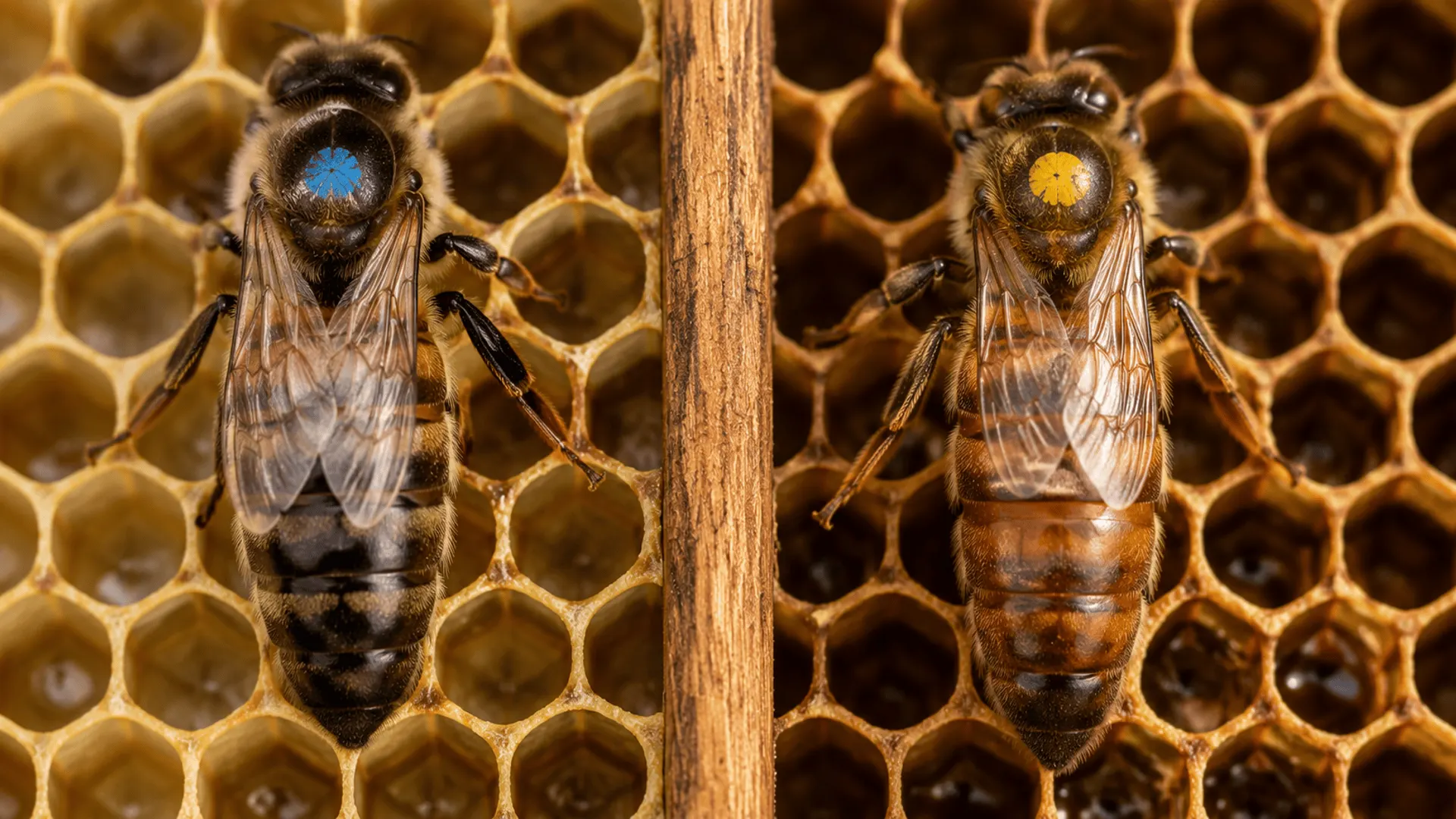
Carnica vs Buckfast: Which Queen Bee Suits Your Apiary?
Carnica vs Buckfast bees compared: temperament, honey yield, wintering, swarming and varroa. Which breed fits your climate, nectar flows and experience?
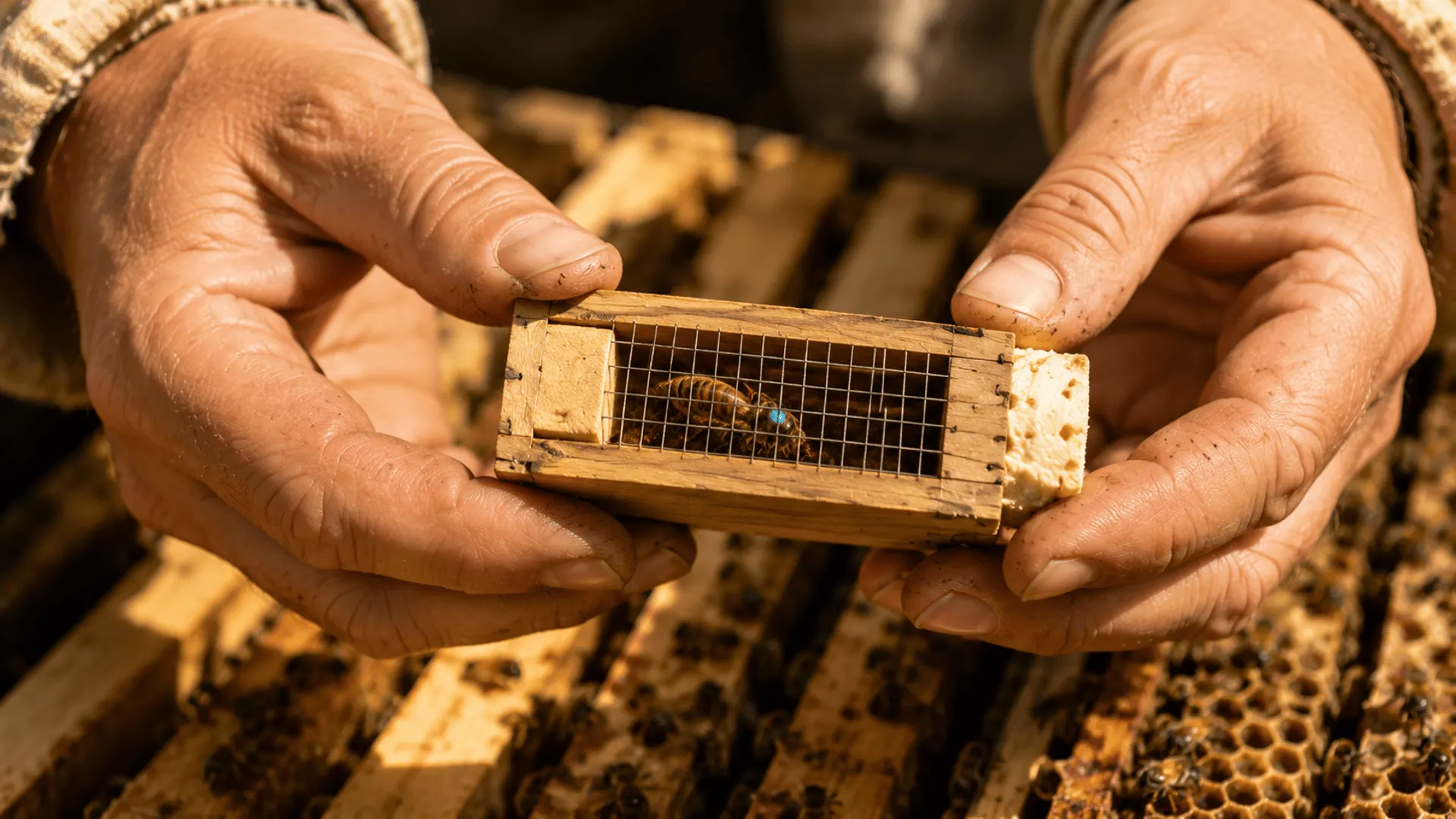
How to Introduce a Queen Bee: Step-by-Step Cage Method
How to introduce a new queen bee with the cage method: prepare the colony, place the cage, when to check, how to confirm acceptance and what to do if she fails.
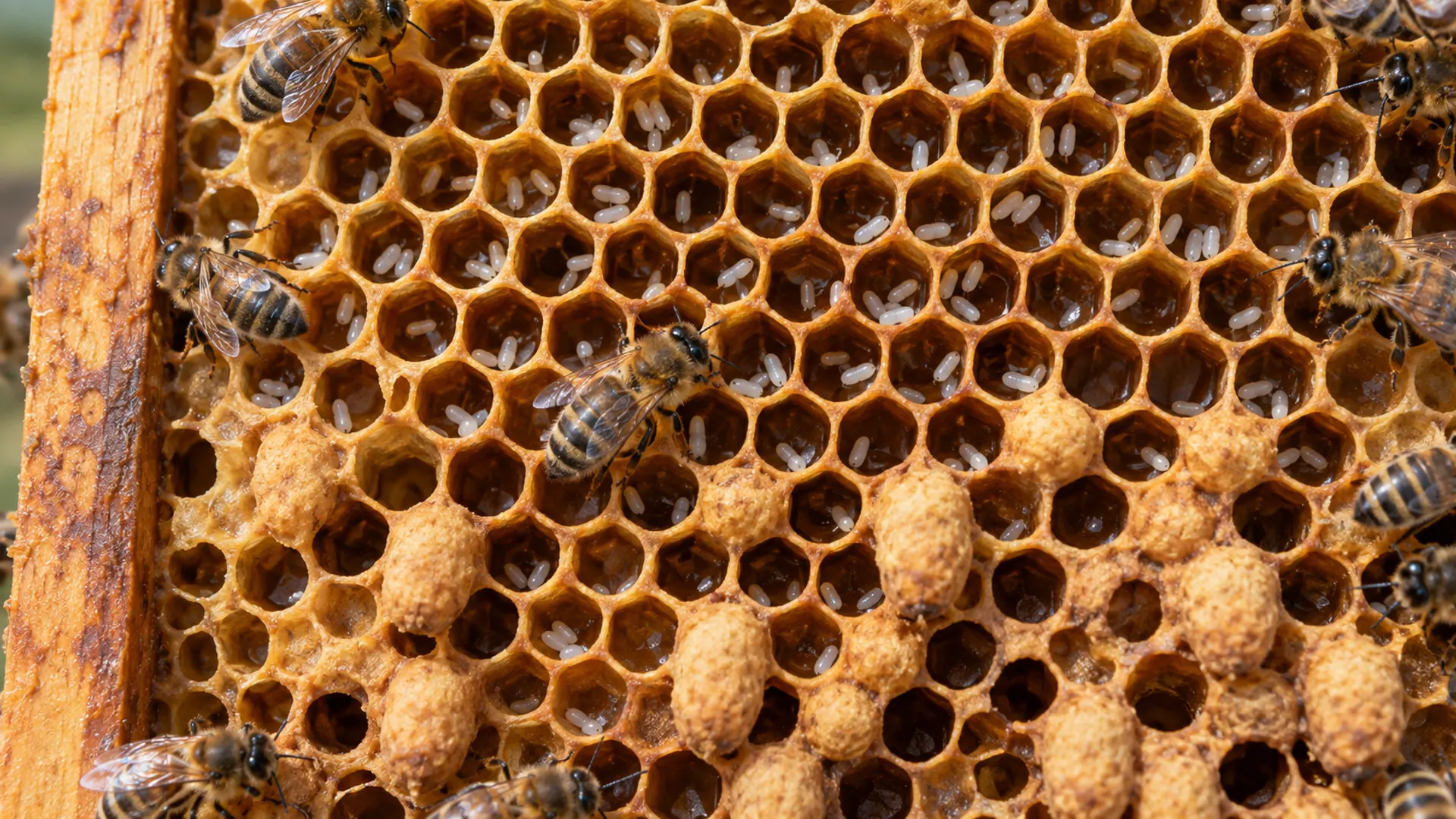
Laying Workers: How to Spot Them and Save the Colony
Laying workers or a drone-laying queen? How to tell them apart, why laying worker bees reject a new queen, and four methods that work to save the colony.